Living on Muskegon Lake Year-Round: What Changes by Season
Dock timing, boat traffic, quiet fall water, winter ice, and the practical rhythms of full-time lake life.
Muskegon Lake changes month by month, and those changes matter if you are thinking about full-time waterfront living instead of occasional warm-weather visits. Spring brings dock work and water-level questions. Summer brings boat traffic, marina pressure, and the busiest weekends. Fall is quieter and often underrated. Winter can be cold and demanding, but it is also when the lake's frozen side comes out.
July beauty is a given here. The question is whether the whole-year rhythm fits your life: snow removal, dock installation, winter access, wake exposure, utilities, boat storage, fall haul-out timing, and the reality of living near an active all-sports lake with a commercial channel connection.
For the broader area context, start with the Muskegon Lake Living Guide.
Spring: Ice-Out, Dock Work, and Early Water Questions
Spring on Muskegon Lake is a reset season. Ice leaves, shoreline debris shows up, docks and lifts go back in, and people start paying close attention to water levels and access. Some years feel easy. Other years bring saturated yards, high water, or awkward timing where the calendar says spring but the lake still feels cold and unsettled.
Early boat traffic is lighter than summer, but service providers get busy quickly. Dock installers, lift companies, marina crews, landscapers, and boat mechanics all work on compressed seasonal schedules. If you live here full time, spring planning becomes part of the annual routine.
Summer: Peak Boat Traffic, Wakes, and Marina Pressure
Summer is when Muskegon Lake feels most active. Boats move between private docks, marinas, restaurants, the Muskegon River, and the Lake Michigan channel. The lake is large enough to absorb more activity than smaller inland lakes, but weekends still feel different from weekday mornings.
Wake exposure, dock orientation, sunset direction, and marina availability matter more than people expect. If you need a slip, do not assume one will be easy to find at the last minute; the city's public launch ramps and Hartshorn Marina slips are finite and seasonal. If you have your own dock, pay attention to depth, bottom type, prevailing wind, and how passing traffic affects your shoreline.
Water quality is another summer variable, and it differs noticeably from one local lake to the next. Muskegon Lake's size and its channel connection to Lake Michigan keep its open water moving, while smaller, more enclosed lakes nearby can see more late-summer algae. If you are comparing options, it is worth understanding how those conditions play out on nearby Bear Lake.
Fall: The Quiet Season Locals Appreciate
Fall may be the best-kept-secret season on Muskegon Lake. The water gets quieter, the light changes, and the lakefront feels less hurried. You still get good days on the water, but without the constant peak-season movement.
It is also the season for practical decisions: when to pull the boat, when to winterize irrigation or exterior plumbing, when to remove lifts, and how to prepare for storms, leaves, and freezing temperatures. Winter goes easier for people who use the quiet weeks to get ahead of it.
Winter: Frozen Lake Life and the Chores That Come With It
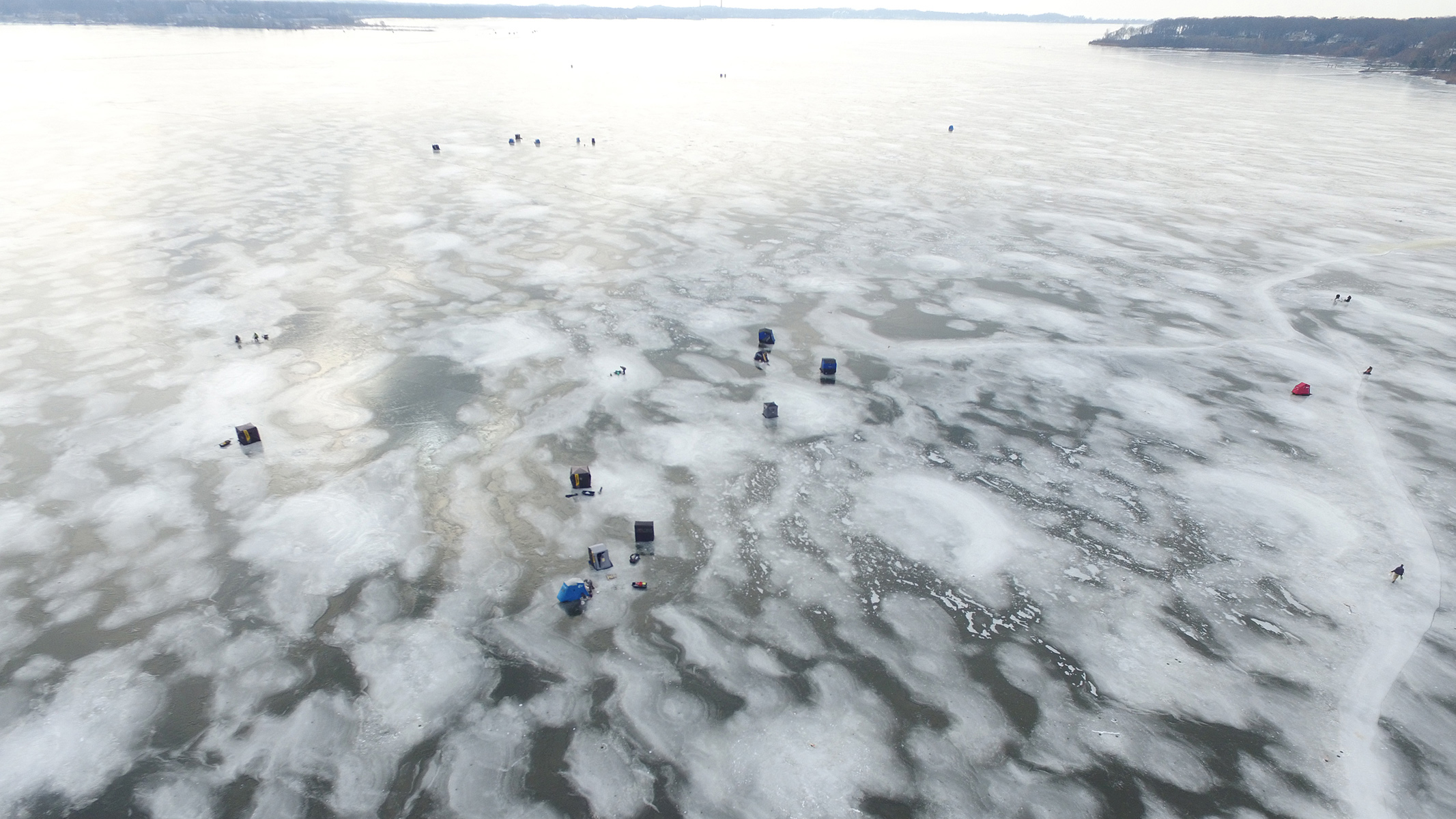
Most people think waterfront living shuts down in winter. On Muskegon Lake, it shifts. When cold weather arrives and the lake surface freezes solid, a different community comes out: ice fishermen, ice sailors, kite skaters, and people who simply want to walk across a frozen lake and see the shoreline from a perspective you cannot get in summer.
In a good freeze year, these are routine sights. Muskegon Lake hosts organized ice sailing, kite skating runs, and ice shanty towns that can look like small villages on the ice. The lake's size gives winter users enough open surface to move, while the protected basin freezes more reliably than Lake Michigan. You can watch one of those shanty towns build and shift through the winter on the live Muskegon Lake camera, and the winter perch bite that draws it is covered in the Muskegon Lake fishing guide.
Winter also brings the ordinary side of living here: heating costs, plowing, icy drives, frozen shoreline conditions, and watching the channel and commercial traffic behave differently than in warm weather. The videos below show the recreational side.
The Converted Cottage: When a Summer House Becomes a Year-Round Home
Much of the older housing stock on Muskegon-area lakes started life smaller than what stands there today. A summer cottage went up decades ago, then a porch was enclosed, a bedroom went over the crawl space, a bunkhouse got wired out back - often across several owners, and not always with permits. Plenty of those places have grown into comfortable year-round homes. If you are buying one, the question is whether the building actually made that whole journey or just looks like it did.
The tells are structural and mechanical. Ask what the foundation is - poured, block, crawl space, or posts - and whether the additions sit on the same footing as the original. Ask how the place is heated: a central system, or the space heaters and wood stove that were fine for July weekends. Ask whether the water lines run below frost depth or where a summer place could get away with putting them. Then pull the permit history at the township or city building office - it is the fastest way to learn which parts of the house officially exist - and where the records run thin, hire an inspector who knows cottage conversions.
One cottage-era leftover deserves its own check: the underground heating-oil tank. Where a cottage once burned oil for heat, the tank that fed it did not always come out of the ground when the furnace changed. Michigan's rules require an underground tank that is no longer in use to be removed within a year - or, where removal would threaten a nearby structure, cleaned and filled in place - and EGLE's guidance for homeowners is blunt about the rest: a leak often goes undetected until the tank comes out, most insurance will not cover the cleanup, and the liability for a neglected tank will likely land on the owner. Walk the yard and the basement wall for cut-off or unexplained pipes, ask the seller directly, and remember the disclosure form only covers what the seller knows.
The systems that came with cottage life - the well, the septic, the private road plowed on somebody's goodwill - carry their own checks, and those live in the waterfront hidden-risks guide. Between that page and this one, you are asking the question July never forces: was this house built for February?
North Muskegon to Muskegon: Crossing the Lake Under Sail
An ice yacht making the full crossing from North Muskegon to the Muskegon side of the lake. These boats are deceptively fast - when the wind is right and the ice is clean, they cover ground in a way that is hard to believe until you see it in person. The elevated North Muskegon shoreline is visible in the background. I was surprised how well the drone kept up with the wind and ice yachts.
Ice sailboat crossing Muskegon Lake - North Muskegon to Muskegon © MuskegonWaterfront.com
Along the Shoreline: Ice Sailing Close-Up
A closer look at ice sailing along the Muskegon Lake shoreline. The ice boat's runner blades and sail rigging (US MS62) are visible here - these are purpose-built craft. The flat, frozen surface of Muskegon Lake creates ideal conditions when temperatures have been consistently cold enough to build a solid ice sheet.
Ice sailing along the Muskegon Lake shoreline © MuskegonWaterfront.com
Kite Skaters on the North Muskegon Side
Two kite skaters working the North Muskegon side of the lake. Ice kite boarding uses the same kite technology as water kite surfing, but on skates instead of a board - you can cover enormous distances when the wind cooperates. The North Muskegon shoreline sits elevated behind them, giving a sense of the lake's scale and the open ice surface that makes this possible.
Kite skaters on Muskegon Lake - North Muskegon shoreline © MuskegonWaterfront.com
Ice Sailboats and a Freighter Sharing the Lake
I have not seen this on another Michigan lake: multiple ice sailboats out on the frozen surface with a freighter or tug in frame - a working commercial vessel sharing the scene with recreational ice sailors. Muskegon Lake's deep-water port status means freighters and commercial vessels use the channel year-round, even when the main lake is frozen. The result is a working waterway running alongside frozen recreation.
Ice sailboats on Muskegon Lake alongside a commercial freighter/tug © MuskegonWaterfront.com
What Makes This Possible
Muskegon Lake's size and shape suit winter wind sports well when it freezes. The 4,149-acre surface gives ice sailors and kite skaters room to build speed and make long runs. The lake is generally sheltered enough to freeze solid - unlike Lake Michigan, which rarely freezes except in extreme cold years - but open enough that wind can really work.
The lake does not freeze every winter. When temperatures stay below freezing long enough to build a solid ice sheet, these activities happen. When winters are mild, they do not. That variability is part of the experience - a good freeze year is something residents talk about.
If you are considering waterfront living on Muskegon Lake and wondering what winter is like, these videos are an honest answer: it can be spectacular, and the community that forms on the ice in those winters is unlike anything you would expect from a "frozen" lake.
Bottom Line
Muskegon Lake is a true year-round waterfront, but each season asks something different from residents. Before committing to full-time lake life, weigh the whole calendar: the dock work and haul-out, the plowing and heating bills, and the frozen weeks that can turn out to be the best part.
Keep Reading
About this guide
Written by James Maurer, a retired municipal employee with 25 years in West Michigan local government and a lifetime on these lakes.