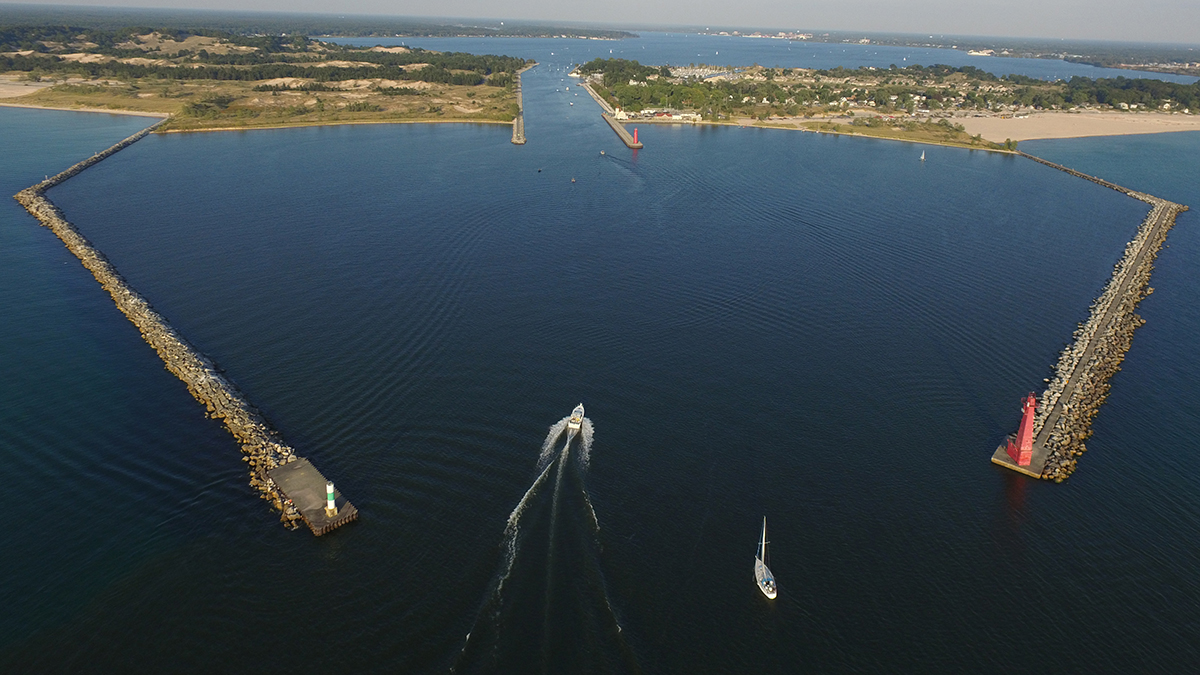
Living on Muskegon Lake: What You Actually Need to Know
Last reviewed August 2026. Restaurant, event, and water-condition details change with the season; verify anything time-sensitive before you rely on it.
Muskegon Lake has seen more cleanup and restoration work than the area's other inland lakes, Bear Lake in North Muskegon and Mona Lake, and for good reason. This 4,149-acre all-sports lake underwent roughly $85 million in sediment cleanup and habitat restoration after being designated a Great Lakes "Area of Concern" for decades. It was officially delisted by the EPA in September 2025, just the eighth U.S. Area of Concern ever to come off the list, following contaminated sediment removal, shoreline and wetland rebuilding, and extensive habitat restoration.
The restoration changed how people use and talk about the lake, from marina activity to public access, trails, paddling, fishing, and waterfront events. Direct Muskegon Lake lakefront is still different from marina access or a water-view setting. See what changes by season and how it compares to Lake Michigan.
The Restoration Story
Looking at Muskegon Lake today, it is hard to imagine what it was. For decades, industrial contamination kept it on the federal "Area of Concern" list. The cleanup involved removing contaminated sediments, rebuilding miles of shoreline and wetland habitat, and restoring natural areas that had been degraded for generations.
The result: a recovery documented step by step in the EPA's delisting record. The restoration improved far more than water quality; it transformed the entire lake ecosystem and the community around it. Properties that once overlooked compromised water now front a restored resource.
Algae is the caveat that remains, and 2026 was an active summer for it. Muskegon County Public Health had harmful-bloom warnings posted on the lake in August 2024. On July 15, 2026 the City of Muskegon posted an algae awareness notice saying recent monitoring had identified areas of algae growth in portions of the lake, and on August 21, 2026 the city passed along a county health department report of an algal bloom near the Pere Marquette Channel. Conditions vary by spot and by day, so skip water that looks like pea soup or spilled paint, and check current advisories before swimming or letting pets in. The state's Michigan Harmful Algal Bloom Reports map shows where blooms have been reported and sampled around the state.
Quick Facts
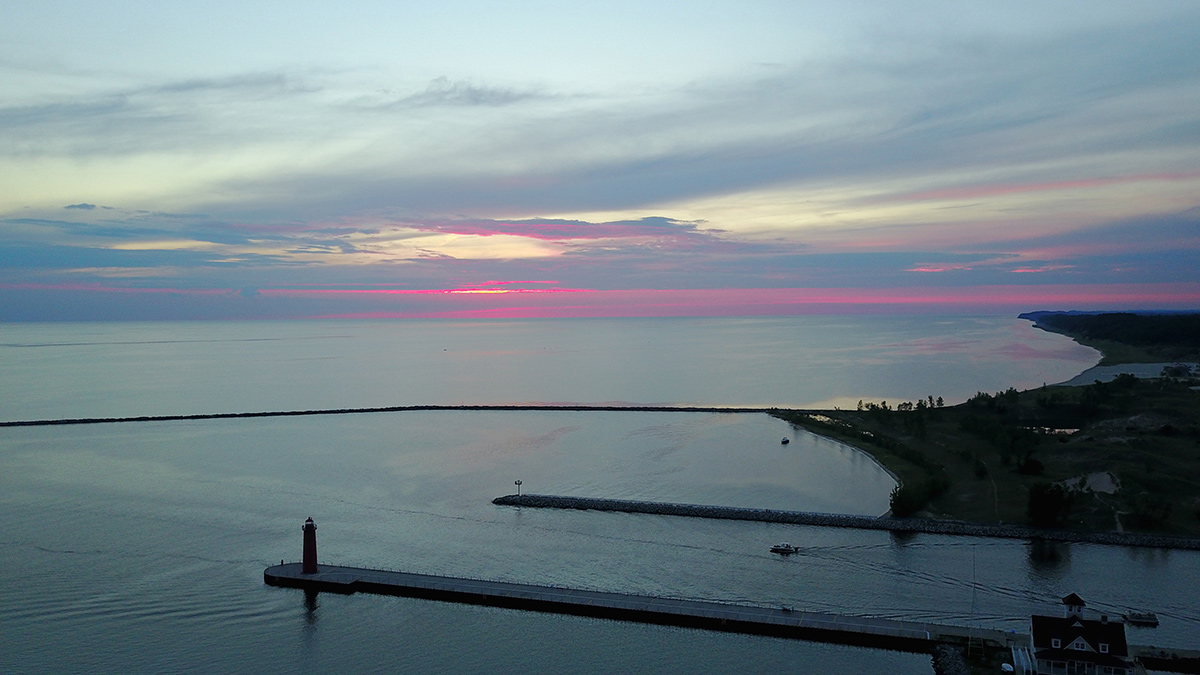
Boat-Up Restaurants
Living on Muskegon Lake also puts you within walking or boating distance of local dining spots. The lake has a surprising number of places where you can pull up, tie off, and grab a meal without ever leaving the water:
- Lake House Restaurant - a classic waterfront spot at Terrace Point with lake views and seasonal menus. Its own site mentions a dock but does not publish guest-docking details, so call before you arrive by boat.
- BoDocks (formerly Dockers Fish House) - casual, local, right on the water, and known for live music.
- Muskegon Brewing Company - the restaurant location, where you can enjoy local brews and food with a lake view.
- BLT Bear Lake Tavern - technically on the Bear Lake channel, but accessible from Muskegon Lake via the connecting channel if your boat is not too large for the bridge.
One spot worth knowing about, though it is not a Muskegon Lake boat-up: The Deck sits on Lake Michigan at Pere Marquette Park, with beach access only and often live music. It is a separate trip from lake boating.
The Boat Size Advantage
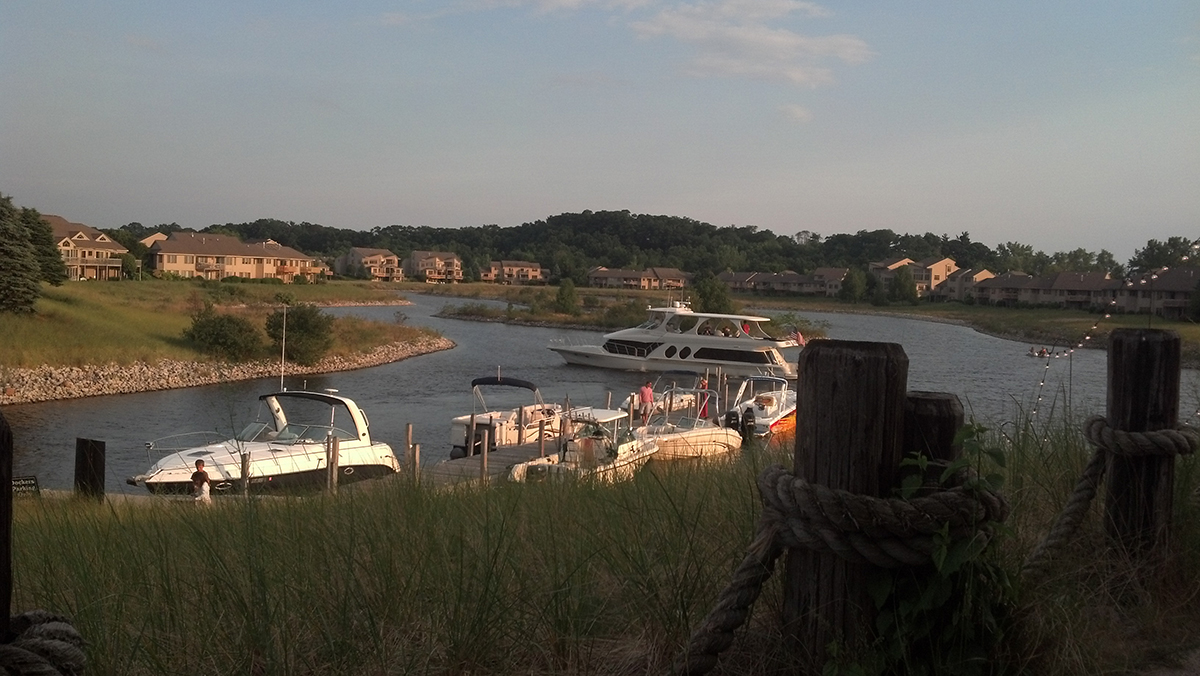
Unlike Bear Lake, where boat size is limited by the low bridge on the Bear Lake channel, Muskegon Lake has no bridge between your dock and Lake Michigan, and the navigation channel is dredged deep enough for freighters. In practice the limits are your boat's draft, dock or slip space, and big-lake weather rather than any bridge clearance. That access changes how you use a boat: leave your dock in the morning, be on Lake Michigan within minutes, and make a day of it up or down the coast - north to White Lake at Whitehall or Pentwater, south to Grand Haven. Mona Lake is also within reach, though its shallow channel keeps that run to smaller boats.
Sound Carries Differently on the Lake
Sound is a practical detail people do not always think about. The Muskegon city side of the lake tends to be more active than the North Muskegon side, especially near downtown, marinas, restaurants, events, and the channel area. That energy can be part of the appeal if you want a livelier waterfront setting.
It is still worth checking in person. Near the channel and beach areas, summer music from waterfront spots like BoDocks at Harbour Towne can carry farther than you might expect, even across the water toward quieter stretches. Visit the exact area at different times, including a summer evening, so you know whether the sound level fits how you want to live.
Ferry Connection
From Muskegon Lake, you can take your car to Milwaukee for the weekend. The Lake Express high-speed car ferry operates between Muskegon and Milwaukee, and locals ride it as routinely as tourists do - business trips, family visits, weekend getaways. You drive your car onto the ferry, relax for about two and a half hours, and step off in Wisconsin. From Muskegon Lake, it is a short drive to the terminal.
More about the Lake Express ferry to Milwaukee
Fishing on Muskegon Lake
Fishing is part of Muskegon Lake's year-round identity. The short version is that restored habitat, deep water, shoreline structure, river influence, and the Lake Michigan channel all shape the fishery.
Read the Fishing Guide
For species, public access, DNR context, seasonal notes, and practical local takeaways, use the separate Muskegon Lake fishing guide.
Where to Launch and Dock
If you do not have a private dock, public access still gets you on the water. For the four public ramps, the boat-size limit, current launch-pass fees, and Hartshorn Marina slips, see Muskegon Lake marinas and public boat launches.
Muskegon Lake and Bear Lake Water Depth Map
View a NOAA-based depth map with Muskegon Lake water depth, Bear Lake water depth, channel details, and Muskegon Harbor reference features.
View depth mapGreat Lakes Harbor Views
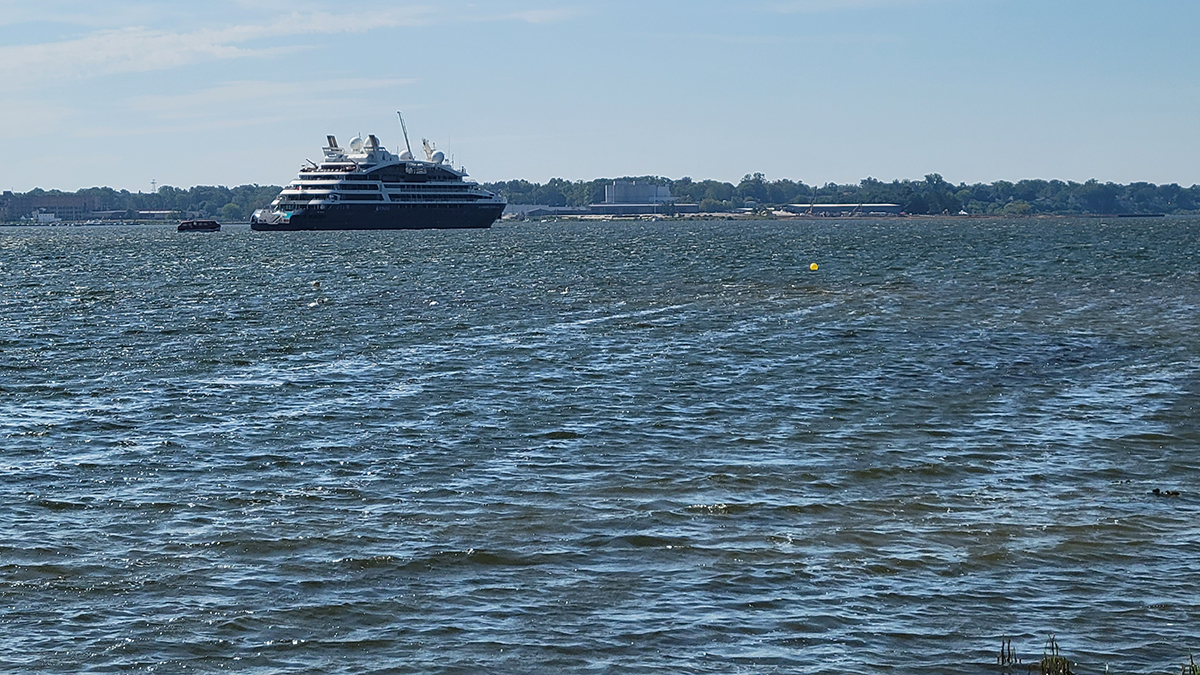
Muskegon Lake is one of the few places where you can watch large vessels travel between Lake Michigan and an inland lake from your shoreline. The deep water port means freighters, cargo vessels, and cruise ships move through the lake, with some cruise ships docking at Heritage Landing on the Muskegon side. Freighter-watching from your own shoreline is a habit locals never quite drop.
From elevated positions in North Muskegon, you can watch these vessels navigate the channel, along with regattas, cruise ships, and kite surfers in season. In winter, when conditions are right, you will see ice boats and ice kiteboarding - activities that only happen on frozen, windswept surfaces like this.
River Access: Paddling the Muskegon's Three Branches
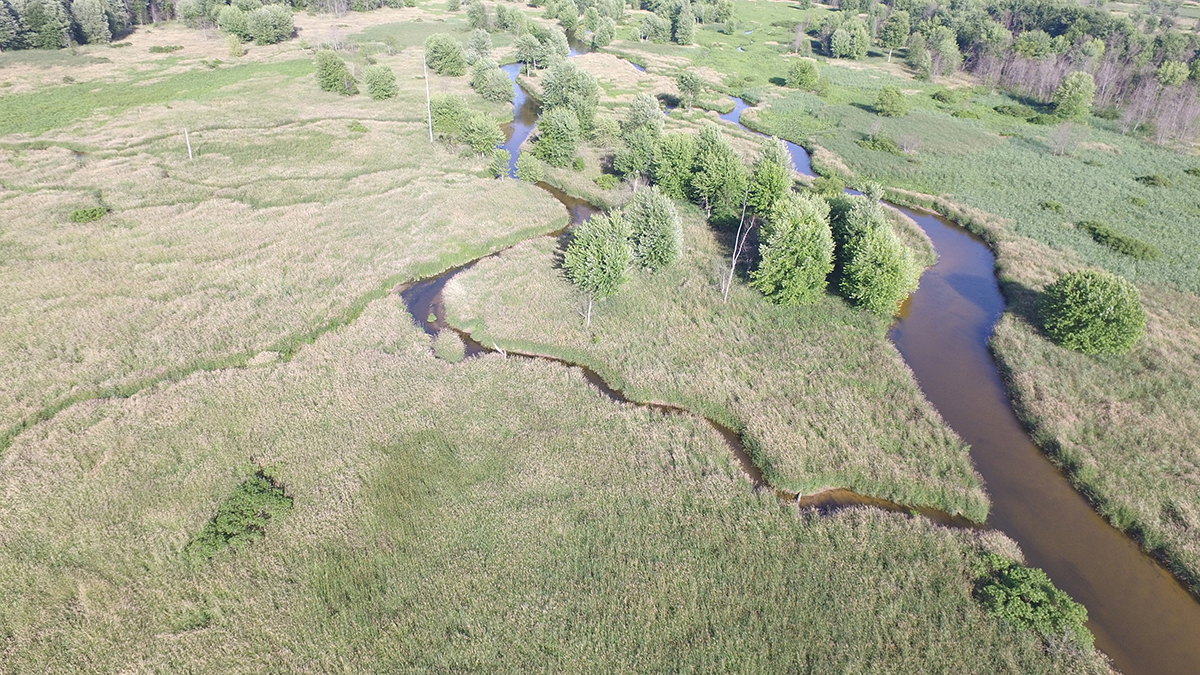
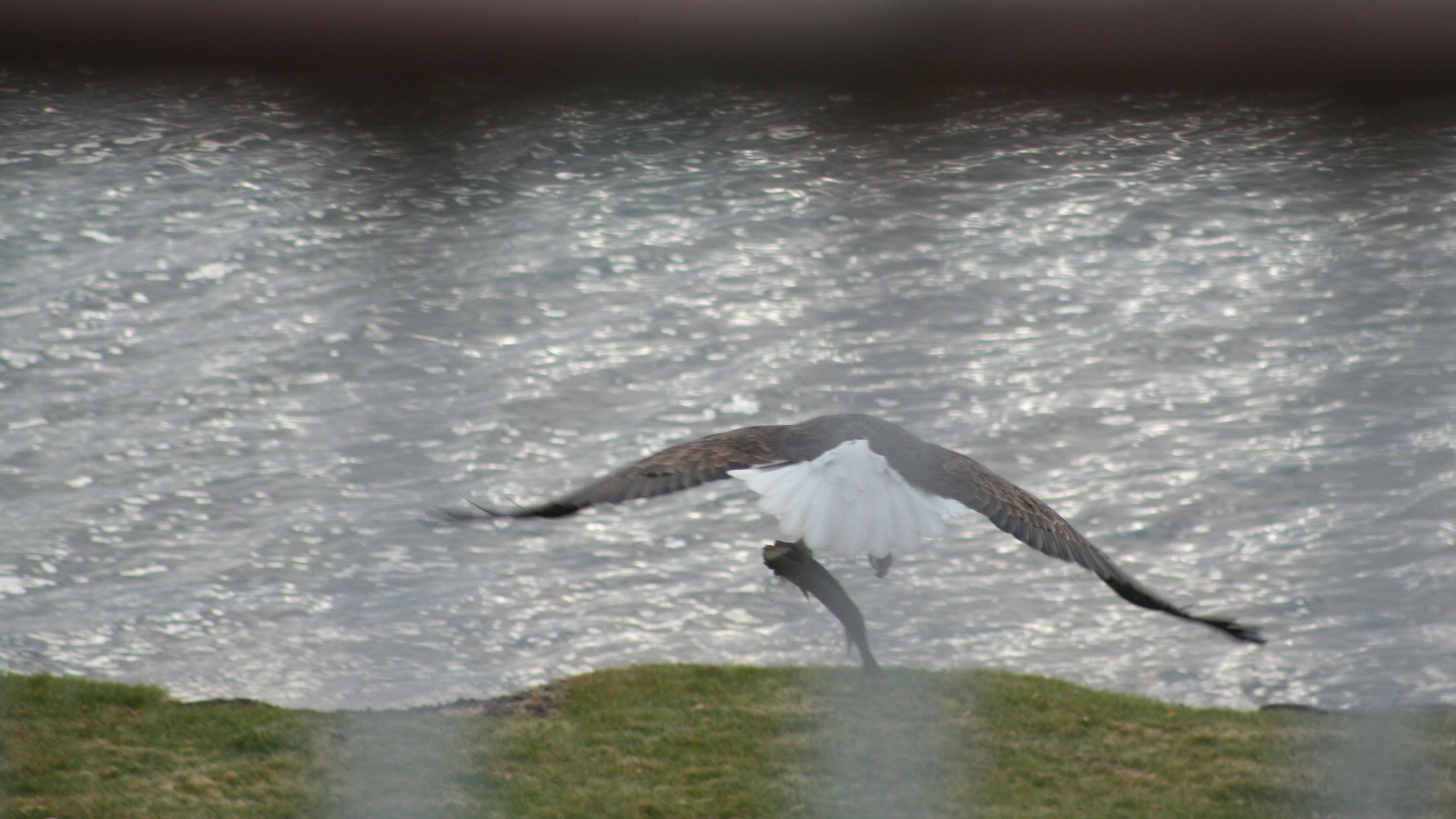
One of Muskegon Lake's underrated features: access to the Muskegon River via the north, middle, or south branch. Paddle up any of them and the setting flips within a few minutes - bald eagles, great blue herons, shorebirds, and endless cattail paths winding between the branches.
For kayakers and small craft, the birdlife up the branches outclasses anything you will see from the open water, and none of the other local lakes can offer it - Bear Lake has no river system, and Lake Michigan is obviously a different proposition entirely.
Winter on Muskegon Lake
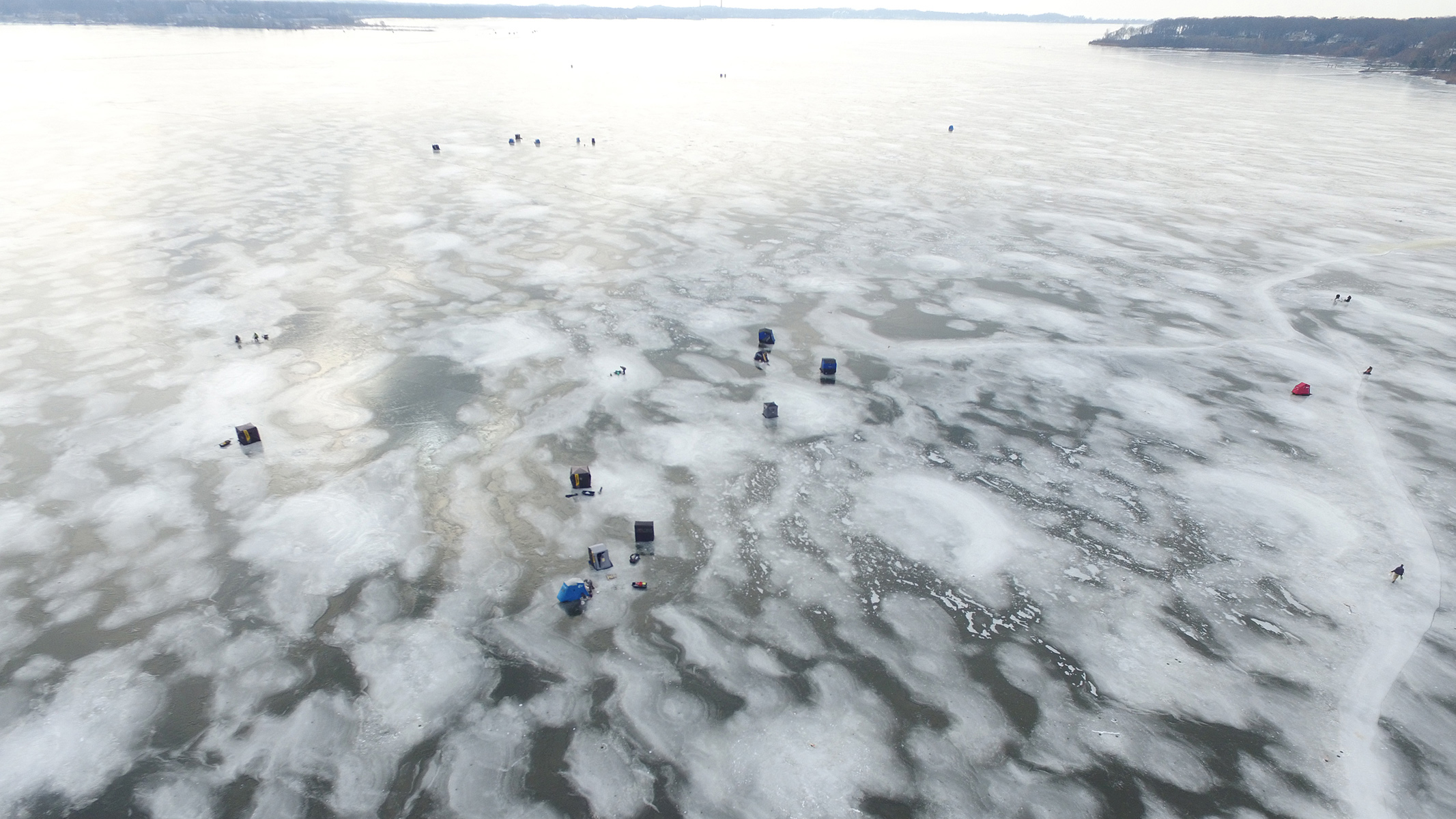
When Muskegon Lake freezes, it becomes something else entirely. Ice fishing, ice boats, frozen-channel views, and wind-driven winter activity are part of the local rhythm when conditions line up.
For the fuller season-by-season breakdown, including winter access, utilities, heating, dock timing, summer traffic, and fall quiet water, read Living on Muskegon Lake Year-Round.
Fourth of July Fireworks Over the Water
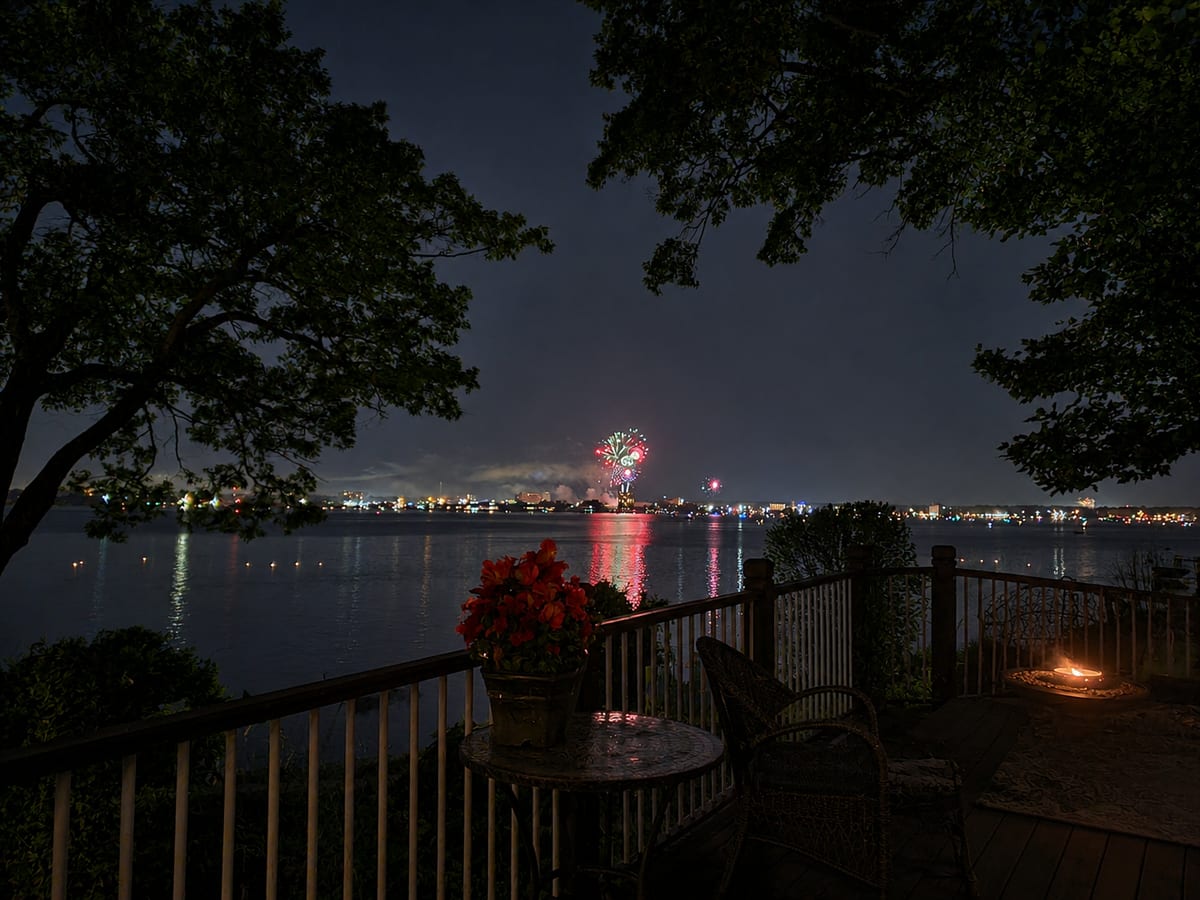
Fourth of July is a real event on the water here, with displays over the lake near Heritage Landing and the downtown waterfront. There is also a wider angle: from the elevated North Muskegon shoreline you can take in several towns' fireworks at once, a 360-degree show nobody at water level gets. That elevation advantage is covered on the North Muskegon guide.
Life on Muskegon Lake: Summer Events Nearby
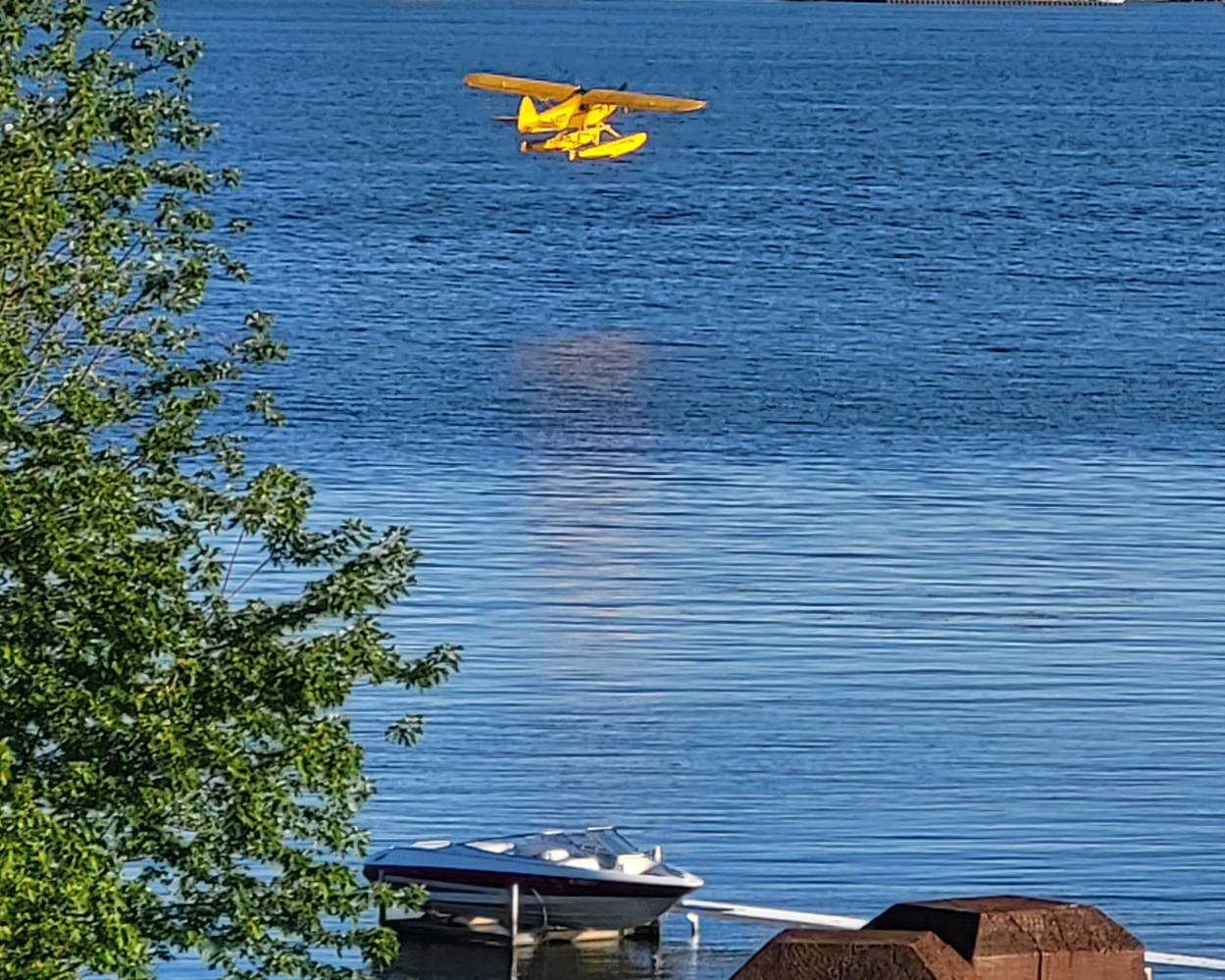
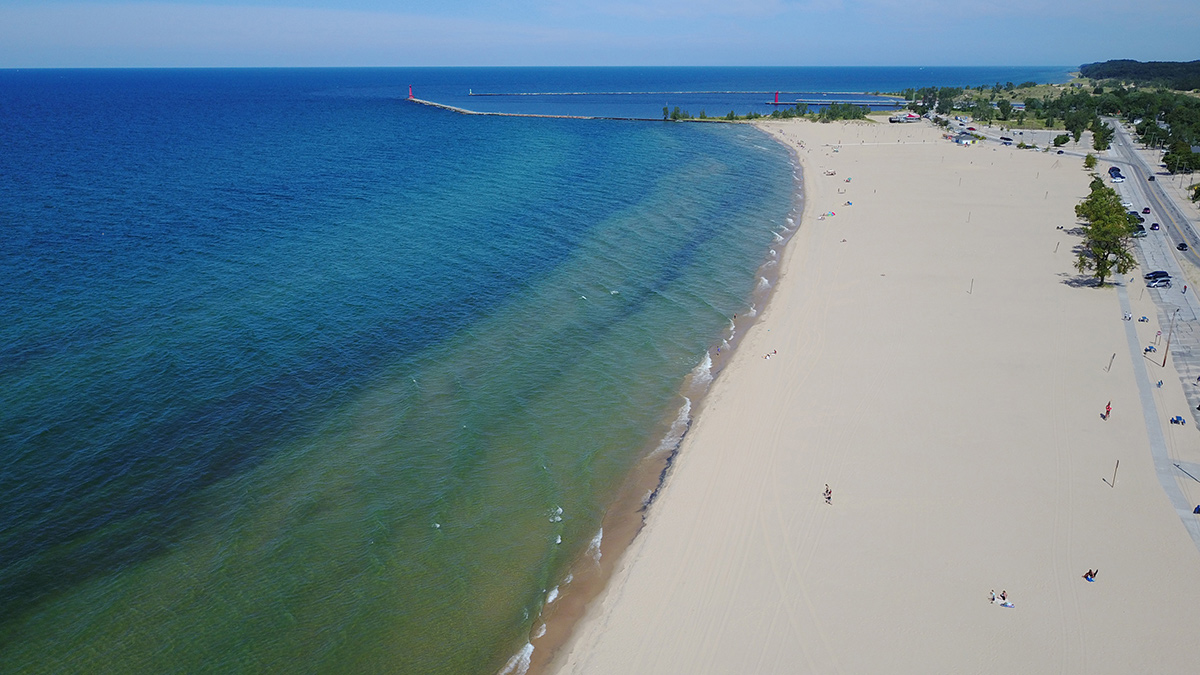
Living here means the regional event season is in your backyard - not something you drive hours to reach. Heritage Landing sits directly on Muskegon Lake's shore, downtown Muskegon is only a few blocks inland, and Pere Marquette Beach is just beyond the channel. This is not an events calendar; it is a picture of the kind of summer activity that becomes part of normal lake-area life.
June usually brings the first strong wave of downtown activity. Taste of Muskegon fills Hackley Park with food, music, and people who may have spent the afternoon near the water. Parties in the Park runs most Friday evenings all summer in the same park - live music, food, and proceeds that go to the local nonprofits hosting each night. The Muskegon Pride Festival, the Miss Michigan Competition at the Frauenthal, and the Lakeshore Art Festival all add to the sense that downtown is active, walkable, and tied into the waterfront season.
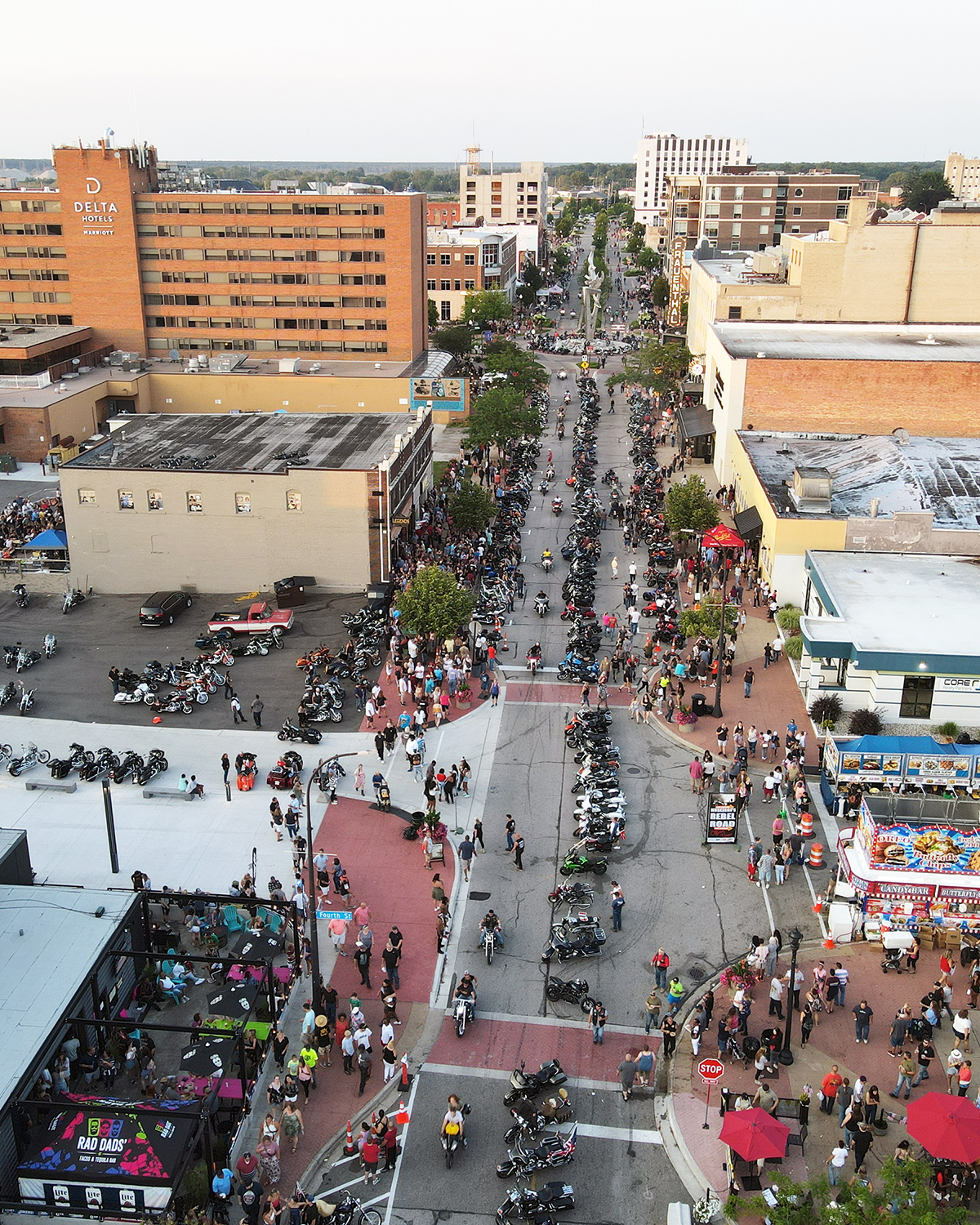
July is when the lake and downtown both feel fully awake. Fourth of July fireworks at Heritage Landing put the show directly on Muskegon Lake, and from elevated North Muskegon positions you may see multiple communities' displays at once. Muskegon Bike Time and the Rebel Road rally land the same July week - two separate motorcycle events that together bring a louder, busier downtown weekend. Factor in the bikes, vendors, and street energy if you are comparing quiet waterfront living with a more active city-side setting.
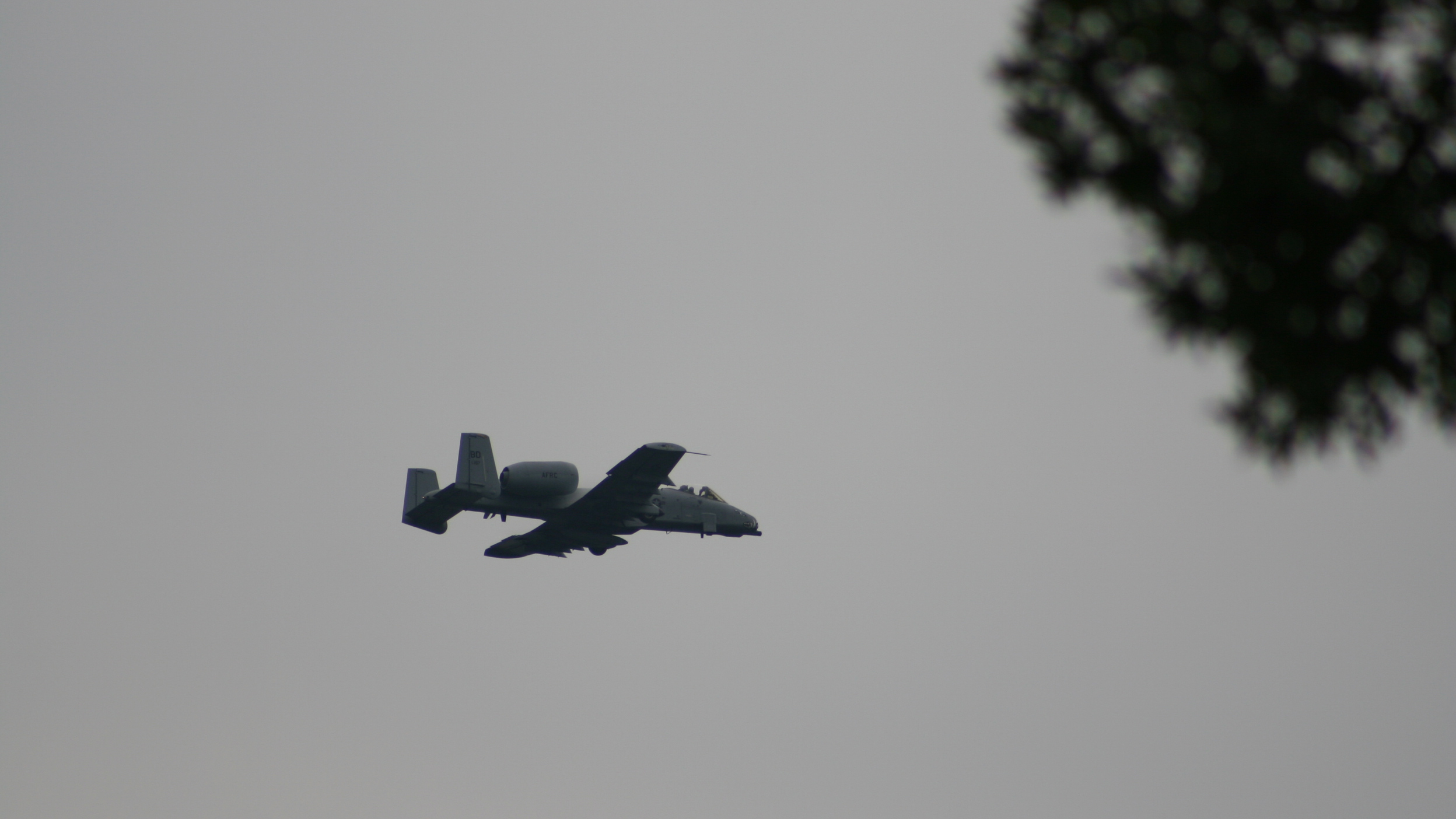
August keeps the pace going. Unity Christian Music Festival takes over Heritage Landing for multiple days. The North Muskegon parade is a small-city tradition just across the lake. The Great Lakes Surf Festival at Pere Marquette Beach celebrates SUP, yoga, and surf culture on the big lake, while Wings Over Muskegon adds a different kind of summer spectacle to the broader area.
September wraps up the outdoor season with two back-to-back anchors. The Muskegon Polish Festival runs Labor Day weekend at Hackley Park - authentic Polish food, polka, live bands, and a vodka bar, now in its second decade as a community tradition. Then the Michigan Irish Music Festival takes over Heritage Landing - Celtic music, food, and culture on the waterfront before the weather turns. Attend them or not, they are close by, part of the rhythm of living near the water. For dates, times, and a full current calendar, Visit Muskegon keeps an up-to-date events calendar.
What's Nearby
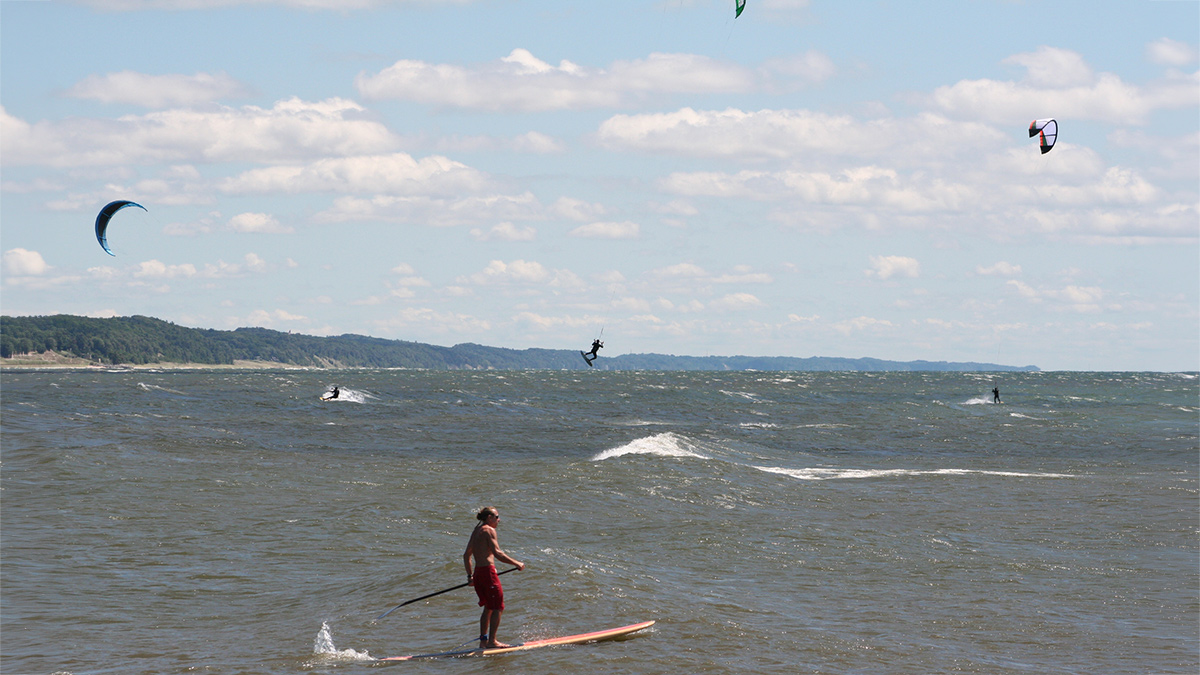
There is more to the area than its water. The USS Silversides Submarine Museum is one of the most distinctive - a WWII submarine you can actually tour, with guided experiences and naval history. Michigan's Adventure is a major regional draw with rides and a water park.
The Muskegon Farmers Market is another everyday plus for the downtown side of the lake. It sits a few blocks from many downtown waterfront homes, close enough that fresh produce, flowers, baked goods, coffee, and Saturday morning errands become the weekly routine instead of a special trip.
The city side also has the kind of neighborhood detail that does not show up in a property description. When we lived next to Fire Station #4, the emergency services staff were genuinely friendly. One firefighter would even bring cookies to my wife from time to time when she was pregnant. Small things like that shape how a place feels, especially when you are trying to understand the difference between a map and a real neighborhood.
The bike trail system changes how you get around. From North Muskegon, you can ride into the City of Muskegon and continue beyond the downtown waterfront. Heading north, the Berry Junction Trail connects toward Whitehall and White Lake, and the network eventually reaches Hart.
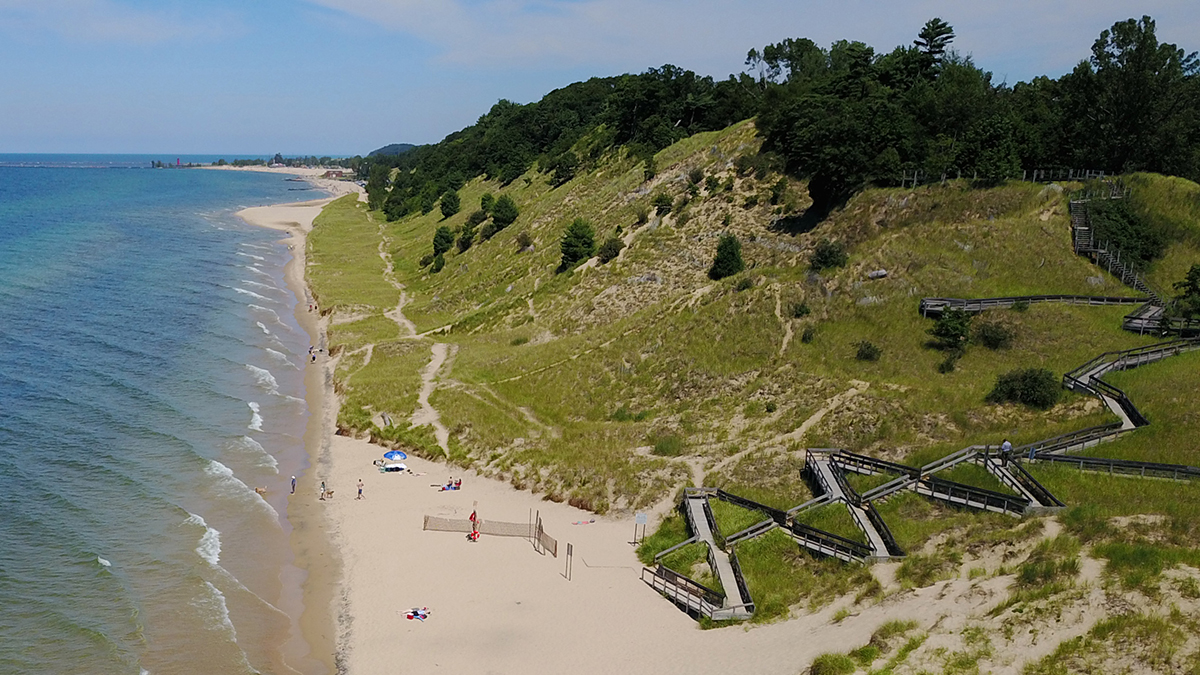
Muskegon State Park offers hiking, swimming, and beaches along Lake Michigan. The Muskegon Luge Adventure Sports Park is genuinely unusual - a public luge track, plus zip-lining and rock climbing, open year-round. The Hackley and Hume Historic Site preserves restored lumber baron homes with guided tours. The Muskegon Museum of Art holds an American and European collection.
Articles
Living on Muskegon Lake Year-Round: What Changes by Season
From spring ice-out to winter ice fishing, here's what to expect in every season.
Read the year-round living guide ComparisonMuskegon Lake vs Lake Michigan: Wind, Waves, Maintenance, Lifestyle
Protected water vs open water - the tradeoffs you should understand before buying.
Read the Muskegon Lake vs Lake Michigan comparison Lake ConditionsMuskegon Lake Live Camera
Check the Muskegon Lake live camera for a North Muskegon lakefront view of waves, visibility, and boat traffic.
View camera FishingMuskegon Lake Fishing Guide
A local guide to Muskegon Lake fishing, restored habitat, public access, and seasonal water conditions.
Read the Muskegon Lake fishing guideCommon Questions About Muskegon Lake
How big is Muskegon Lake?
Muskegon Lake covers about 4,149 acres, which makes it one of the larger inland lakes in West Michigan. It is an all-sports lake connected to Lake Michigan by a navigable channel, with a deep-water port that handles freighters and cruise ships.
How deep is Muskegon Lake?
Based on the NOAA-based depth chart this site uses, Muskegon Lake is about 78 feet at its deepest, in the south-central basin; the open middle of the lake generally runs around 35 to 50 feet, with broad shallows along the north shore. A dredged navigation channel is kept deep enough for freighters and cruise ships. For the full contours, see the Muskegon Lake and Bear Lake water depth map.
Is one side of Muskegon Lake calmer than the others?
In our experience, yes: the north and east sides. Along the North Muskegon shoreline, the stretch between Custer Park and Block 58, the lakefront park mapped as Waterfront Sports Park, can stay calm even when the open lake is rough. The live camera on this site looks out from that same North Muskegon lakefront, so on a windy day you can watch the difference before you head out.
Where does the Muskegon Lake channel go?
The channel at the west end of Muskegon Lake connects directly to Lake Michigan, so boats can run out to the big lake in minutes. From there it is open-water coastal cruising: north to Pentwater and White Lake at Whitehall, and south to Mona Lake, Grand Haven and Spring Lake by way of the Grand River, and Holland's Lake Macatawa. You can also head inland up the Muskegon River. These coastal runs depend on Lake Michigan weather and your boat, and some channels, like Mona Lake's, are shallow enough that only smaller boats get in.
Has Muskegon Lake been cleaned up?
Yes. Muskegon Lake was officially delisted as a Great Lakes Area of Concern by the EPA in September 2025, capping a restoration that ran roughly $85 million: contaminated sediment dredged out, wetlands rebuilt, shoreline habitat put back. Algae has not vanished from the picture, though: warnings went up in 2024, and blooms were an active issue through the summer of 2026, with the city passing along a county health department report of a bloom near the Pere Marquette Channel on August 21, 2026. When in doubt, stay out, and check current advisories before you swim.
What size boats can use Muskegon Lake?
Everything from kayaks to freighters and cruise ships uses Muskegon Lake, and there is no low bridge on the channel the way there is at Bear Lake. What actually limits a given boat is its draft, available dock or slip space, and conditions on Lake Michigan once you clear the channel. Once through, everything from White Lake down to Grand Haven is an open-water run, weather permitting.
What fishing is available on Muskegon Lake?
Muskegon Lake has a strong local fishing culture, and the fishery draws on a bit of everything: rebuilt habitat from the cleanup years, deep holes, structure along the shorelines, current from the river, and the channel out to the big lake. Species-by-species detail and the seasonal rhythm live in the Muskegon Lake fishing guide.
Can you take a ferry from Muskegon Lake?
Yes. The Lake Express high-speed car ferry runs between Muskegon and Milwaukee, Wisconsin, and the terminal is a short drive from anywhere on the lake. The crossing takes about two and a half hours, which spares you the long drive around Chicago and turns Wisconsin into a realistic weekend.
What restaurants can you boat to on Muskegon Lake?
BoDocks, formerly Dockers Fish House, welcomes boaters at its dock, and Muskegon Brewing Company sits at Adelaide Pointe, where the marina keeps slips reserved for restaurant customers. Lake House Restaurant is on the water at Terrace Point, but its site does not publish guest-docking details, so confirm with the restaurant before arriving by boat. The BLT Bear Lake Tavern on the Bear Lake channel is also reachable from Muskegon Lake if your boat clears the bridge. Note: The Deck is a popular beach restaurant at Pere Marquette Park on Lake Michigan - great for a beach day but not a Muskegon Lake boat-up.
One honest note before you commit to a specific address: the lake is calmer than the big lake, but its low-lying streets can take on water in high-water years, and a sunny-day showing will not show it. The waterfront flooding and hidden-risks guide walks through how to check an exact address.
Related Areas
North Muskegon
Elevated above Muskegon Lake with sweeping views for miles.
ExploreWaterfront Condos
Lock-and-leave lake life with HOA, docks, and marina access.
ExploreMuskegon Waterfront Transformation
How the lake cleanup, downtown rebuild, and marina growth changed this waterfront.
ExploreMoving to the Muskegon Waterfront
Use the relocation checklist to plan Muskegon Lake dock timing, utilities, storage, winter access, and service details before moving day.
ExploreAbout this guide
Written by James Maurer, a retired municipal employee with 25 years in West Michigan local government and a lifetime on these lakes.