Muskegon Lake vs Lake Michigan: Wind, Waves, Maintenance, Lifestyle
Both are waterfront. Both are in the Muskegon area. But living on Muskegon Lake and living on the Lake Michigan shoreline are fundamentally different experiences.
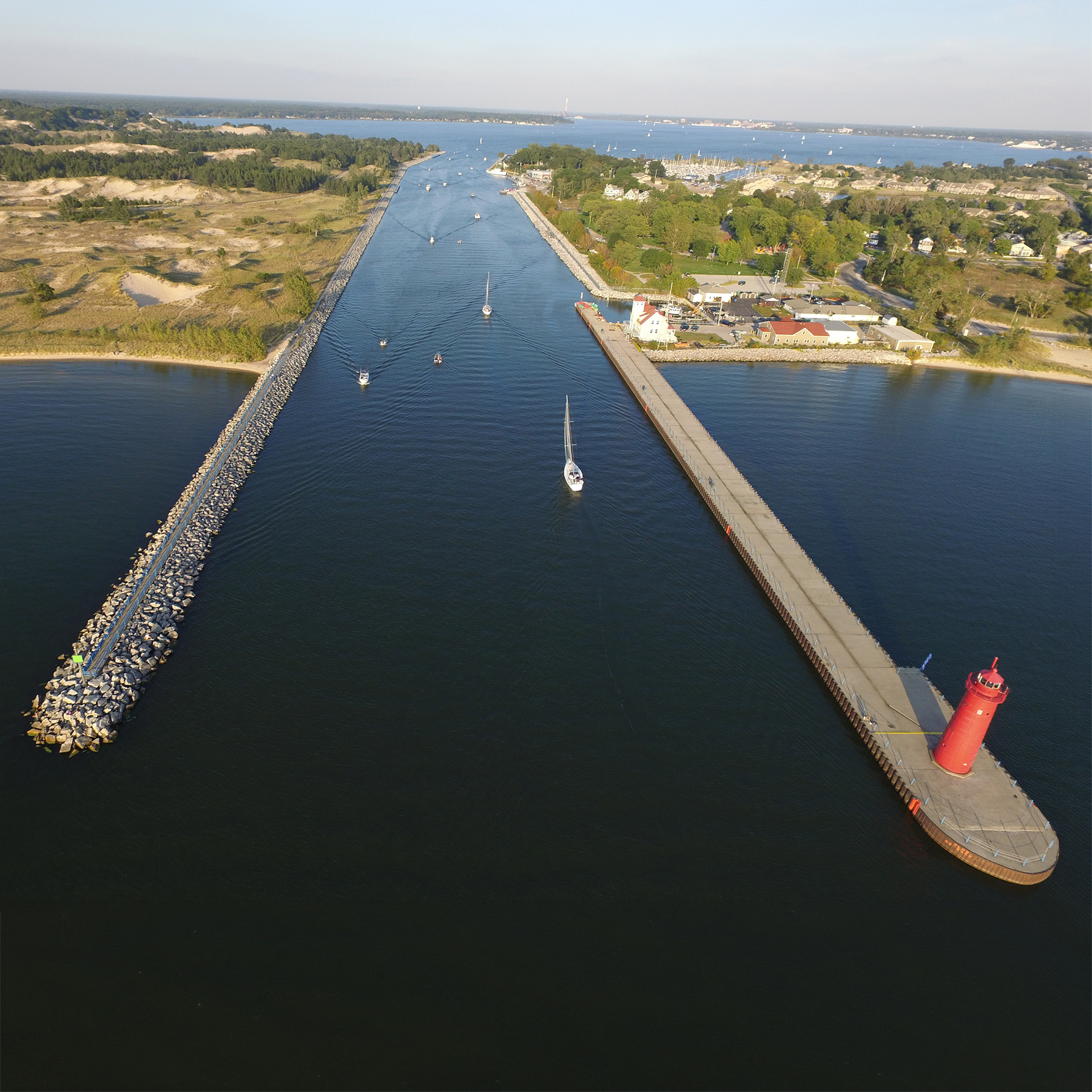
This is one of the most common questions I hear from waterfront buyers in the Muskegon area: "Should I look at Muskegon Lake or Lake Michigan?" The answer depends on what you want the water to do for you.
The Basic Difference: Protected vs Open Water
Muskegon Lake is a protected inland lake - 4,149 acres of relatively calm water, connected to Lake Michigan by a navigable channel. It is also the cleanest of the three local lakes (Muskegon, Bear, and Mona) following a major restoration, which the water quality section below covers in more detail. Lake Michigan shoreline properties face open Great Lakes water, with all the wave action, wind exposure, and weather that implies.
This single difference cascades into almost every other consideration: maintenance costs, dock longevity, boat storage, heating bills, lifestyle, and even the kind of community you will find.
Temperature: A Gap That Changes Through the Season
Lake Michigan runs colder than Muskegon Lake through most of the swimming season. How much colder changes with the month, and sometimes across a single week. NOAA's Muskegon buoy, station 45161, records the Lake Michigan side of that comparison from open water off Muskegon.
The buoy's 2025 water temperature record runs from May 21 to September 22, and across those months it read anywhere from 43.2°F to 77.7°F. Every reading it took in May came in under 60°F, with a high for the month of 51.1°F. The coldest reading of the whole season, 43.2°F, came in June.
By July the buoy was reading in the seventies, and the season high of 77.7°F came that month. Through the 22 days it reported in September, it held between 65.5°F and 70.9°F. That is how far Lake Michigan's own water temperature travels across a single summer.
That difference reshapes the summer. On Muskegon Lake, you get true warm-summer-weather swimming and beach days. On Lake Michigan, even a beautiful sunny day can feel cool because of the lake breeze and water temperature. That chill can be a relief during hot spells - plenty of people count it as a plus - but it limits the kind of summer beach life many buyers imagined.
The lake moderates temperatures in both directions: cooler summer days, milder winter nights near the shore. But if you are dreaming of warm beach days with the kids, know that Lake Michigan delivers a different experience than you will get inland.
Upwelling: How Lake Michigan Turns Cold in a Few Days
The National Weather Service describes upwelling as offshore winds pushing surface water away from shore, which lets cold lake water rise to the surface from beneath. Writing about the southern end of Lake Michigan, its Northern Indiana office says east to northeast winds often cause upwelling along the lake's eastern shore. A NOAA Great Lakes Environmental Research Laboratory study of the whole lake found eastern-shore events preceded by four days of northerly winds. Muskegon sits on that eastern shore.
The National Weather Service puts the scale of it at 20 to 30 degrees in just a few days. It says the cold water mixes back into the warmer water around it once the offshore winds subside and switch direction. It also notes that upwelling can surprise beachgoers who arrive to find very cold water.
The buoy's temperature record shows falls on that scale. In July 2025, station 45161 read a daily high of 75.6°F on the 15th and a daily low of 53.1°F on the 18th. July 18 alone ran from 70.9°F down to 53.1°F. Between July 1 and September 1 that year, nine separate days carried a reading under 60°F.
Those peak-summer events are the sharp end of it. Across the same 2025 season the buoy read under 60°F on 36 of the 125 days it reported, and 27 of those days fell in May and June.
In August 2026 the buoy's wind record was close to complete, and it shows winds out of the northeast on August 1, the north on the 2nd, and the northwest on the 3rd. Over the same days the daily mean water temperature fell from 68.7°F on July 31 to 59.2°F on August 3, with the lowest single reading, 55.0°F, at 4:40 that morning. Winds turned southerly on the 4th, and the daily mean climbed to 62.7°F on the 5th and 67.6°F on the 7th. By August 16 the buoy was back in the low seventies.
The same NOAA laboratory study classified upwellings from satellite imagery between 1992 and 2000. It found Lake Michigan's eastern shoreline averaging about 18 upwelling days a year, in a range of 5 to 34, with a single eastern-shore event averaging about 9 days, in a range of 2 to 24. It named Muskegon to Frankfort as one of the two stretches of the lake most likely to show an upwelling. The authors put the end of the upwelling season usually in November, and in some years in early December.
Those authors also set out a limit of their method. At the satellite resolution they worked with, they wrote, smaller events occurring as a narrow strip of cold water close to the shore will likely be missed.
Important: a buoy reading cannot tell you whether the water is safe. It is one instrument in open water about 74 feet deep, with its temperature sensor 1 meter below the water line, and it is never a green light for a swim. Water at the shoreline reads differently, and it can be the colder of the two. The National Weather Service saw that in an August 2006 upwelling on this shore. It put the plume of cold surface water along the southeast shore in the mid to upper 50s, while a buoy out in the middle of Lake Michigan still read in the low 70s.
On the danger itself, the National Weather Service cold water page says cold shock can be just as severe and dangerous in water of 50 to 60°F as it is in water at 35°F. The same page says sudden immersion can trigger gasping or rapid breathing in water as warm as 77°F. It describes a later stage, physical incapacitation, as a loss of muscular control in the arms, legs, hands and feet that makes staying afloat without help virtually impossible. Check conditions where you actually plan to swim, and follow National Weather Service West Michigan beach guidance before you go in.
Buoy figures above are from NOAA NDBC station 45161, the Muskegon Buoy, owned and maintained by NOAA's Great Lakes Environmental Research Laboratory. Its 2025 water temperature record runs from May 21 to September 22, so it covers none of the late-fall end of the upwelling season. Daily means, highs and lows are calculated on Michigan local days from the station's own archive file, which timestamps in UTC, and the August 2026 wind directions are daily vector means from the same file. Upwelling frequency, duration and location are from Plattner, Mason, Leshkevich, Schwab and Rutherford, Journal of Great Lakes Research, 2006. Not a forecast; for official beach and marine forecasts and warnings, see the National Weather Service. Today's Lake Michigan reading at Muskegon, alongside the current Muskegon Lake reading, is on the live camera page.
Wind and Waves
Muskegon Lake
Muskegon Lake gets wind, but the fetch is limited - you are not getting the full force of a Lake Michigan gale hitting your shoreline. Boat wakes are the primary wave source, and those are intermittent. On a calm day, the water can go glassy.
Lake Michigan
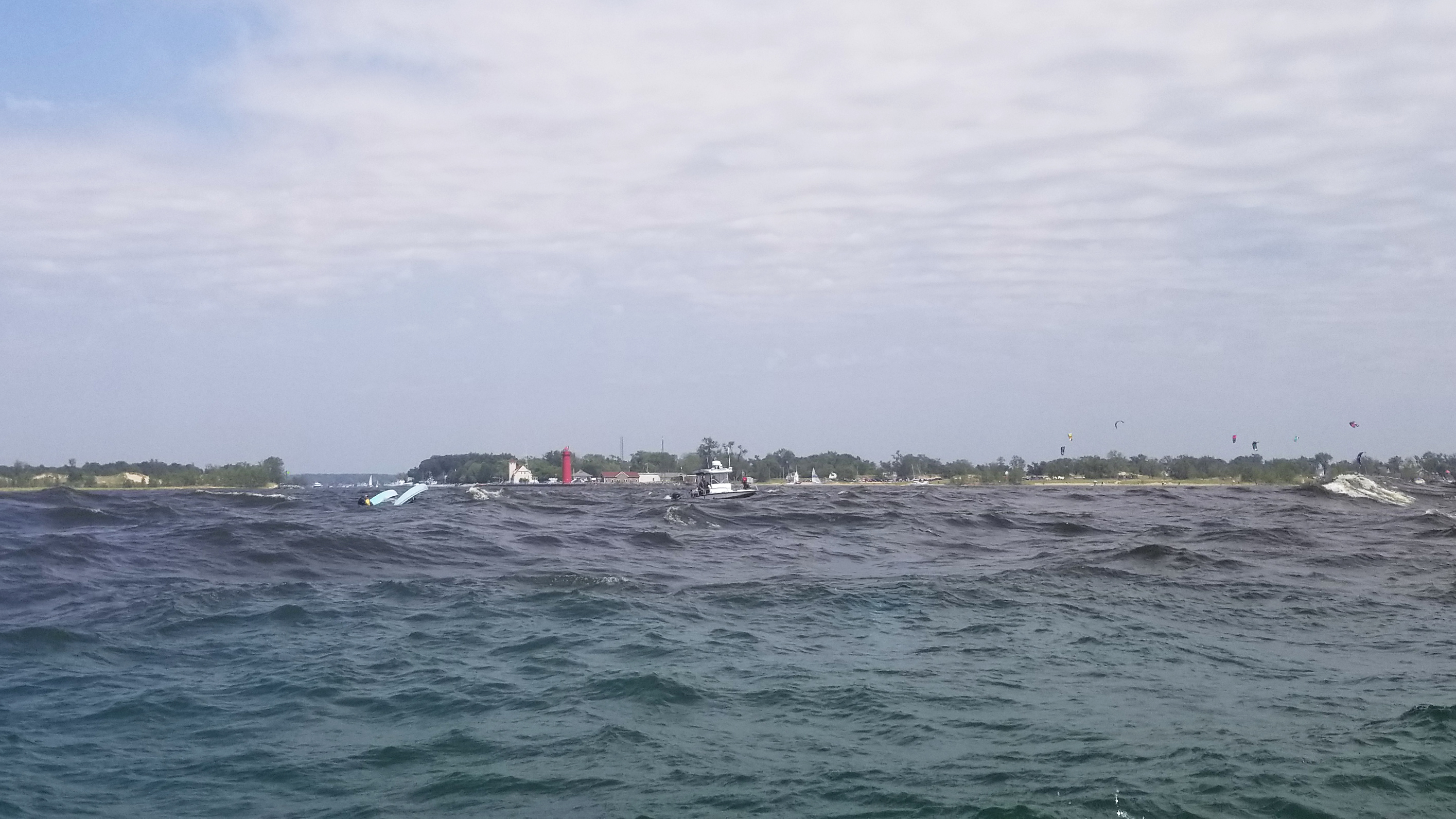
Lake Michigan shoreline faces the full brunt of western and northern weather systems. Waves can be substantial even on nice days if there has been weather across the lake. During storms, the waves get large enough to damage anything not built for them.
The tradeoff in practice: the same exposure that makes the Lake Michigan shoreline such a show is what pounds docks and seawalls, while Muskegon Lake's limited fetch is why you can keep a boat in the water all season. If storm-watching sounds like a feature, look at the big lake. If everyday time on the water matters more, protected water earns its keep.
Water Quality
Muskegon Lake
Of the three local lakes - Muskegon, Bear, and Mona - Muskegon Lake has the strongest water-quality position today. It was officially delisted by the EPA as a Great Lakes Area of Concern in September 2025, completing roughly $85 million in cleanup work that removed contaminated sediments and restored habitat. A GVSU study projects $8 million in increased home values and $28 million annually in recreation impact from the restoration. EPA's delisting announcement adds that marina customers are up 19%.
The other two lakes carry heavier nutrient histories. Bear Lake still runs phosphorus above its 30 microgram-per-liter target - the 2025 GVSU/AWRI assessment measured a season-wide surface average of 39 µg/L - and remains under an active lake-board treatment program. Mona Lake is documented by GVSU/AWRI as eutrophic to hypereutrophic, with the highest nutrient and algae levels of the group, driven by legacy phosphorus loading from Little Black Creek and old celery muck fields. That is the comparison behind the "cleanest of the three" framing - though it is worth saying plainly that Muskegon Lake can still see summer algae, so "cleanest locally" is not the same as "pristine."
Lake Michigan
Lake Michigan is vast - 22,300 square miles of freshwater. Water quality varies by location and condition, but generally you are dealing with a relatively clean Great Lake. Water quality rarely decides this choice. The power of the water does.
Dock and Shoreline Maintenance
Muskegon Lake
Docks on Muskegon Lake have a relatively easy life. Ice damage is the primary threat, and even that varies by winter. Seawalls and shoreline infrastructure last longer in protected water. You are not fighting constant wave action eating away at your shore.
Lake Michigan
Lake Michigan waterfront is hard on infrastructure. Docks need to be built for serious wave action or removed seasonally. Seawalls and erosion control are ongoing concerns. High water years accelerate erosion. Budget for higher maintenance costs and more frequent repairs.
Boating and Water Access
Muskegon Lake
The advantage of Muskegon Lake is protected water for everyday boating, with channel access to Lake Michigan when you want it. You can keep a boat in the water at your dock and use it casually without planning around weather. The channel trip to the big lake takes planning - especially when conditions are rough at the pier heads - but the option is there.
Muskegon Lake also gives you access to the Muskegon River via north, middle, or south branch. Paddle up any of them and you are in a completely different world - bald eagles, great blue herons, cattail paths between branches. It is an inland lake with a river system attached.
Lake Michigan
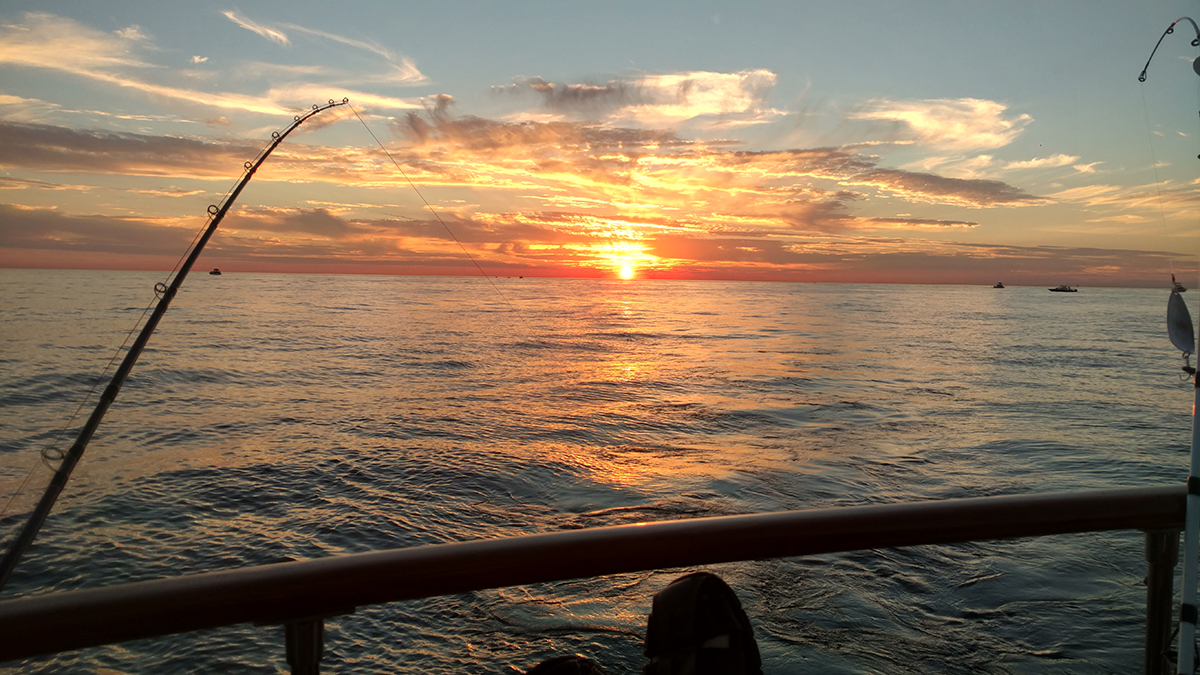
Lake Michigan shoreline means you are on the big lake directly, but that does not usually mean private dock boating in the Muskegon area. The water is too exposed, the waves are too powerful, and shoreline docks are not part of the normal setup here. Small craft like a Hobie Cat, kayak, paddleboard, or jet ski may be wheeled or carried to the beach when conditions cooperate, but big-water weather decides what is practical on any given day.
Heating and Weather Exposure
Muskegon Lake
Waterfront homes on Muskegon Lake get some wind exposure, but it is moderated by the surrounding terrain and the lake's size. Heating costs run higher than inland properties, but the gap is modest.
Lake Michigan
Lake Michigan shoreline homes face the full force of winter weather coming across the lake. Wind chill is real. Heating bills for older homes with western exposure can be substantial. Modern construction with good insulation helps, but expect higher energy costs than protected locations.
Views and Sunsets
Muskegon Lake
Muskegon Lake views are of water, shoreline, and the surrounding community. Western-facing properties get sunset views, but they are looking across the lake to more shoreline - not an unbroken horizon. From elevated positions in North Muskegon, you get sweeping views across the lake and beyond - but that is a different conversation.
Lake Michigan
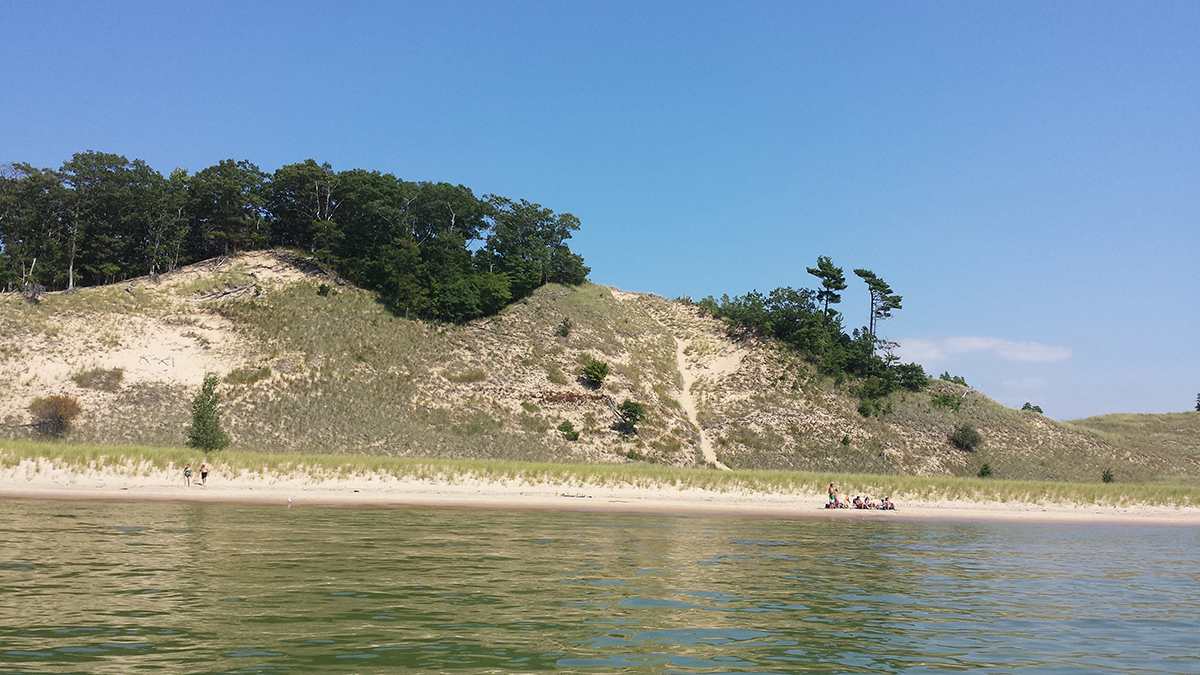
Lake Michigan sunsets drop below an actual horizon - forever views over open water, nothing between you and the sun but lake. For some buyers, this alone is worth the tradeoffs. It is a different kind of view from anything on an inland lake.
Community and Lifestyle
Muskegon Lake
Muskegon Lake has a year-round community. Substantial numbers of full-time residents, organized events, and social infrastructure. You are close to downtown Muskegon, restaurants, and services. The lake is active but not remote. When it freezes, ice shanty towns appear - a whole different community forms on the ice.
Lake Michigan
Lake Michigan shoreline is more varied. Some areas feel like year-round communities; others are more seasonal. You are often further from town centers. The lifestyle tends toward privacy and big open-water views rather than walkable community access.
Choosing Between Them
Choose Muskegon Lake if you want:
- Protected water for casual boating and water sports
- Warmer summer temperatures and more swimmable conditions
- Cleaner water than the other local lakes after the restoration (summer algae still possible)
- Lower maintenance costs on docks and shoreline
- Year-round community with easy access to town
- Channel access to Lake Michigan as an option
- River access for kayaking into completely different scenery
Choose Lake Michigan if you want:
- Forever sunset views over open water
- Direct beach access to Great Lakes water, not typical private-dock boating
- Cooler summer temperatures (some prefer this)
- Privacy and a more remote feel
- The power and beauty of big water, accepting higher costs
- Private beach frontage on a Great Lake
If most of your waterfront time will be spent in the water or on a boat, the protected lake is the practical pick. If the view is the point and you can budget for the extra maintenance and exposure, the open shoreline rewards it.
The Bottom Line
If you want to swim off your dock on warm summer days, keep a boat in the water without worrying about wave damage, and be part of an active year-round community, Muskegon Lake is probably your better fit. If you are willing to accept cooler temperatures, higher maintenance, and more exposure in exchange for horizon-to-horizon views and the drama of open water, Lake Michigan delivers something an inland lake cannot match. Read both lists above as a week of your actual life, then spend the same summer afternoon on both shores before you choose.
Back to the Muskegon Lake hub.
Sources
- U.S. EPA: Muskegon Lake Area of Concern delisted (September 2025)
- Michigan EGLE: Muskegon Lake removed from list of Great Lakes' most polluted sites
- Bear Lake water quality (2025 GVSU/AWRI assessment, phosphorus and TMDL detail)
- GVSU / AWRI: Mona Lake Watershed Assessment (PDF)
- NOAA National Data Buoy Center: station 45161, Muskegon Buoy, owned and maintained by NOAA GLERL
- National Weather Service (Northern Indiana): Upwelling Along Southeast Lake Michigan
- National Weather Service: Cold Water Hazards and Safety
- National Weather Service (Grand Rapids): West Michigan Beach Safety
- NOAA GLERL: Plattner et al., Classifying and Forecasting Coastal Upwellings in Lake Michigan (PDF, 2006)
Related Articles
Year-Round Living on Muskegon Lake
What changes by season, from spring ice-out to winter ice shanty towns.
Area GuideLake Michigan Shoreline Guide
Open water, forever sunsets, and the temperature reality.
Buyer AwarenessWaterfront Flooding and Hidden Risks
High water, erosion, and the risks a listing will not mention, checked by address.