Muskegon Lake Fishing Guide
Muskegon Lake is a drowned river-mouth lake: the Muskegon River comes in at the east end, and the channel to Lake Michigan runs out at the west. That layout shapes the whole fishery - resident walleye, perch, pike, and bass share the water with salmon and steelhead moving between the big lake and the river. The fishing comes first: species, seasons, the spots locals work, public access, and where to check current DNR conditions. For the broader lake-living picture, start with the Muskegon Lake parent guide.
Last reviewed August 2026. Fishing conditions, access details, and event schedules change; check the current DNR sources linked below before a trip.
Check Current DNR Weekly Fishing Conditions
For recent fishing conditions, the Michigan DNR publishes a weekly fishing report that sometimes includes a Muskegon update. That is the best place to check for current notes before a trip.
Treat the weekly report as a recent-condition snapshot, not a real-time forecast. The DNR explains that weekly reports reflect conditions from the past seven days, and that Great Lakes conditions can change daily or even hourly with wind and rain.
This guide uses the DNR fishery report for long-term Muskegon Lake context. Use the weekly DNR report for short-term fishing notes such as salmon activity, pier fishing, channel conditions, Lake Michigan depth ranges, or lure patterns when Muskegon is included.
The rules sit with the DNR too. Fishing regulations, seasons, and size and possession limits change year to year, and special rules can apply to connected waters like the channel and the Muskegon River during seasonal runs. Check the current Michigan fishing regulations and carry a valid Michigan fishing license before you go.
View the Michigan DNR weekly fishing reportThe current week's notes live at that link, straight from the DNR.
Quick Facts About Muskegon Lake
- Size
- About 4,200 acres
- Length
- Roughly 4.5 miles long
- Average Depth
- Around 24 feet
- Maximum Depth
- About 78 feet
- Lake Michigan
- Connected through the channel and harbor
- River System
- At the downstream end of the Muskegon River
The DNR report lists Muskegon Lake at approximately 4,232 acres. Elsewhere on this site and in official AOC material you may see 4,149 acres. For general copy, "about 4,200 acres" is the clearest way to avoid turning a small source difference into a bigger issue than it is.
Maximum depth varies by source the same way. The DNR fishery report describes it as approximately 70 feet, while the NOAA-based chart behind this site's depth reference shows a sounding near 78 feet in the deep central basin, which is the figure used here.
Main Fish Species
The Michigan DNR fishery report describes a broad fish community shaped by Muskegon Lake's protected basin, Lake Michigan channel, Muskegon River connection, shoreline habitat, and long management history. The 2024 DNR survey caught 33 species, with yellow perch, pumpkinseed, and bluegill among the most common fish in the survey catch.
Commonly Discussed Game Fish
- Walleye
- Yellow perch
- Northern pike
- Largemouth bass
- Smallmouth bass
- Great Lakes muskellunge
Other Important Fish Context
- Bluegill, pumpkinseed, rock bass, and other panfish are part of the everyday fishery.
- Channel catfish are noted by DNR as a popular fishery, especially for shorebound anglers.
- Lake Sturgeon use Muskegon Lake and the lower Muskegon River, with natural reproduction in the river system.
- Rainbow trout, also called steelhead, Chinook salmon, and Coho salmon are part of the migratory connection between Lake Michigan, Muskegon Lake, and the Muskegon River.
What that species list really shows is the kind of lake this is: a connected system where resident fish, migratory fish, stocked fish, and naturally reproducing populations all overlap.
Salmon Just Outside the Muskegon Channel
Muskegon Lake connects directly to Lake Michigan through the channel, and that connection is part of why salmon and steelhead matter in the local fishing picture. This silent local clip shows a salmon caught on Lake Michigan just outside the Muskegon channel.
Local salmon fishing example from Lake Michigan just outside the Muskegon channel. The lure shown in the video worked on that trip, but lure choice can change quickly with depth, weather, water clarity, and fish movement.
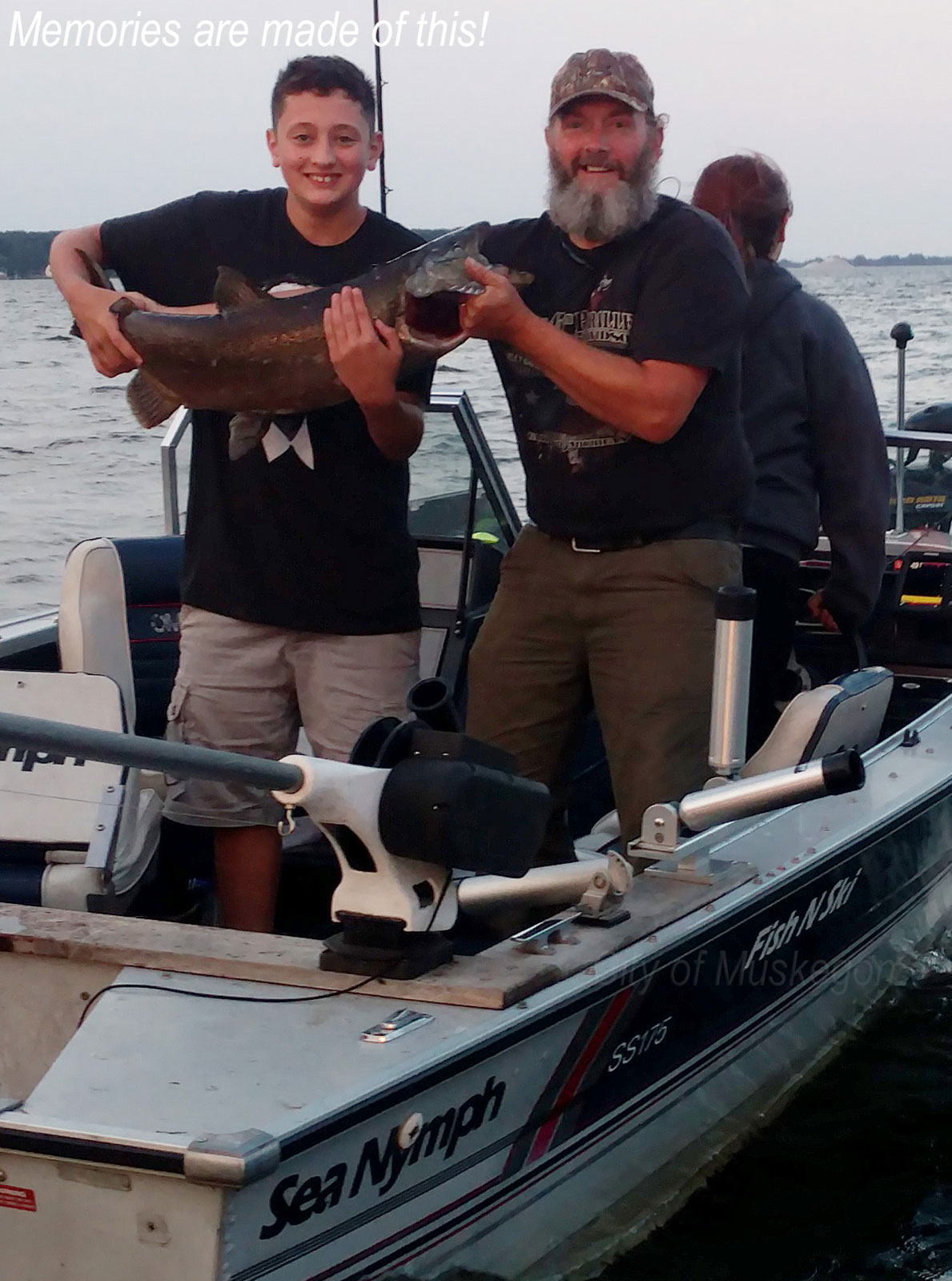
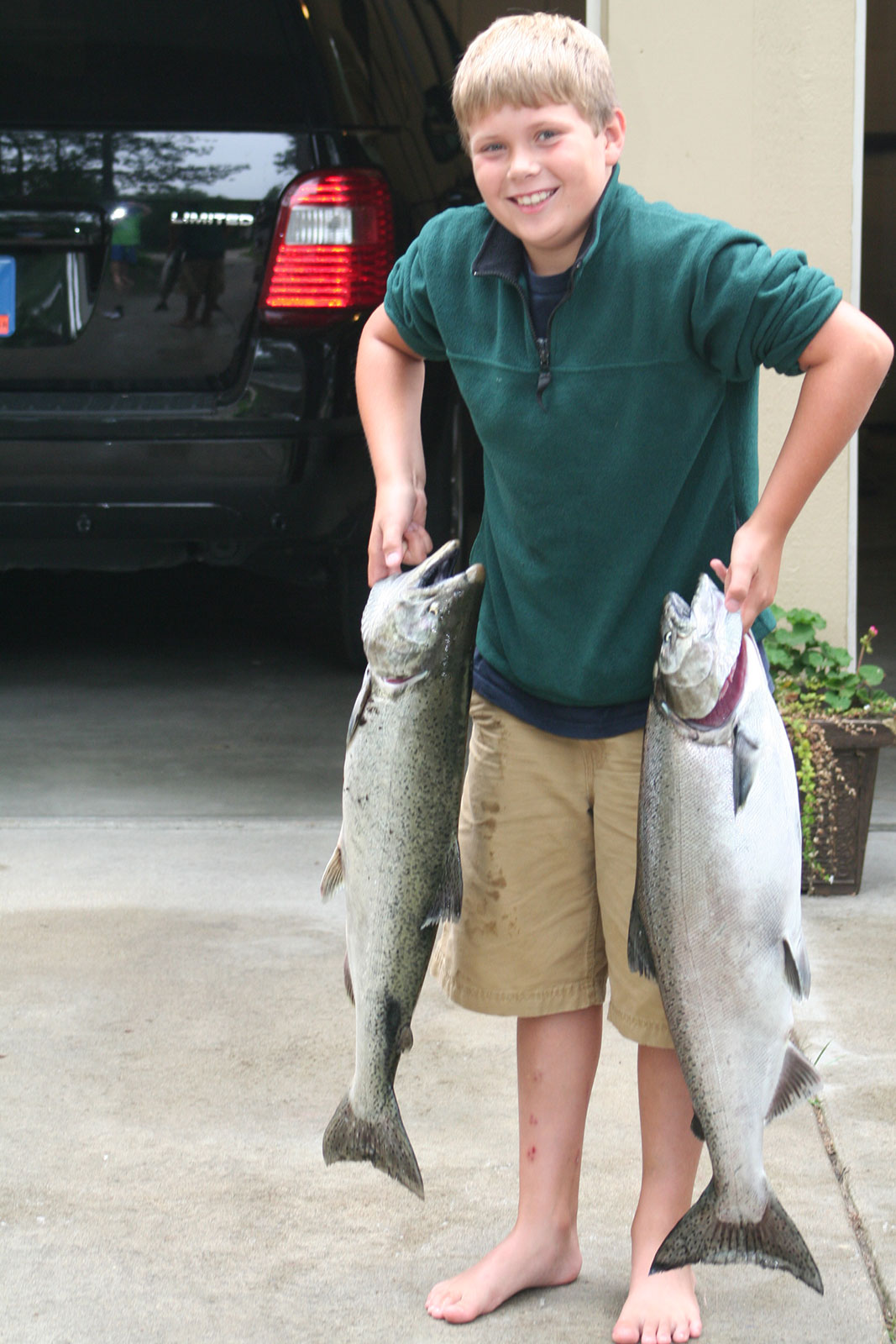
Local Salmon Catches Around Muskegon Waters
Muskegon fishing is not limited to one body of water. Muskegon Lake, the Muskegon Channel, nearby Lake Michigan water, and the Mona Lake channel area are all part of the local fishing story for residents and visitors.
Walleye, Muskie, and Management Context
Walleye are one of the most important managed fish in the Muskegon Lake system. The DNR report notes early walleye fry stocking from 1933 through 1940, resumed stocking in 1974, and regular stocking since then. By the same report, stocked fish from the Muskegon River area can contribute to the Muskegon Lake population.
The 2024 survey added an interesting piece of context: several strong unstocked walleye year classes showed up, including the 2022 and 2024 year classes. DNR described that as encouraging, but also noted that whether the trend continues remains to be seen. Take it as fishery background; it forecasts nothing about any particular season.
Great Lakes strain muskellunge are another management story. The DNR report says they were first stocked in 2013, have been stocked several times since, and were most recently stocked in 2024. The 2024 DNR survey did not catch muskellunge, but angler reports and photos cited in the report confirm stocked fish are surviving and being caught. DNR also noted one juvenile muskellunge caught in a 2024 GVSU survey that was too small to be from recent stocking, which may be an early sign of natural reproduction.
Lake Sturgeon deserve separate respect. They are a state-threatened species in Michigan. The DNR report says Muskegon Lake and the lower Muskegon River support one of the remaining Lake Sturgeon populations in Michigan waters of the Lake Michigan watershed, with no Lake Sturgeon stocking in the system and natural reproduction supporting the population.
Spots and Seasons on Muskegon Lake
Fishing on Muskegon Lake follows a pattern that repeats year after year, and the spots below are the water local boats actually work. For what is biting this week, check the DNR weekly report and ask at a local bait shop.
The salmon story inside the lake happens at its deep spots. From late summer into fall, salmon that came in from Lake Michigan hold in deep water before committing to the run up the Muskegon River. Two of the holding areas local boats work are the water off the Milwaukee Clipper, the retired ferry moored at the old Grand Trunk dock on the south shore, and the deep port water off Verplank's dock by the causeway at the lake's east end - the last deep water before the river mouth.
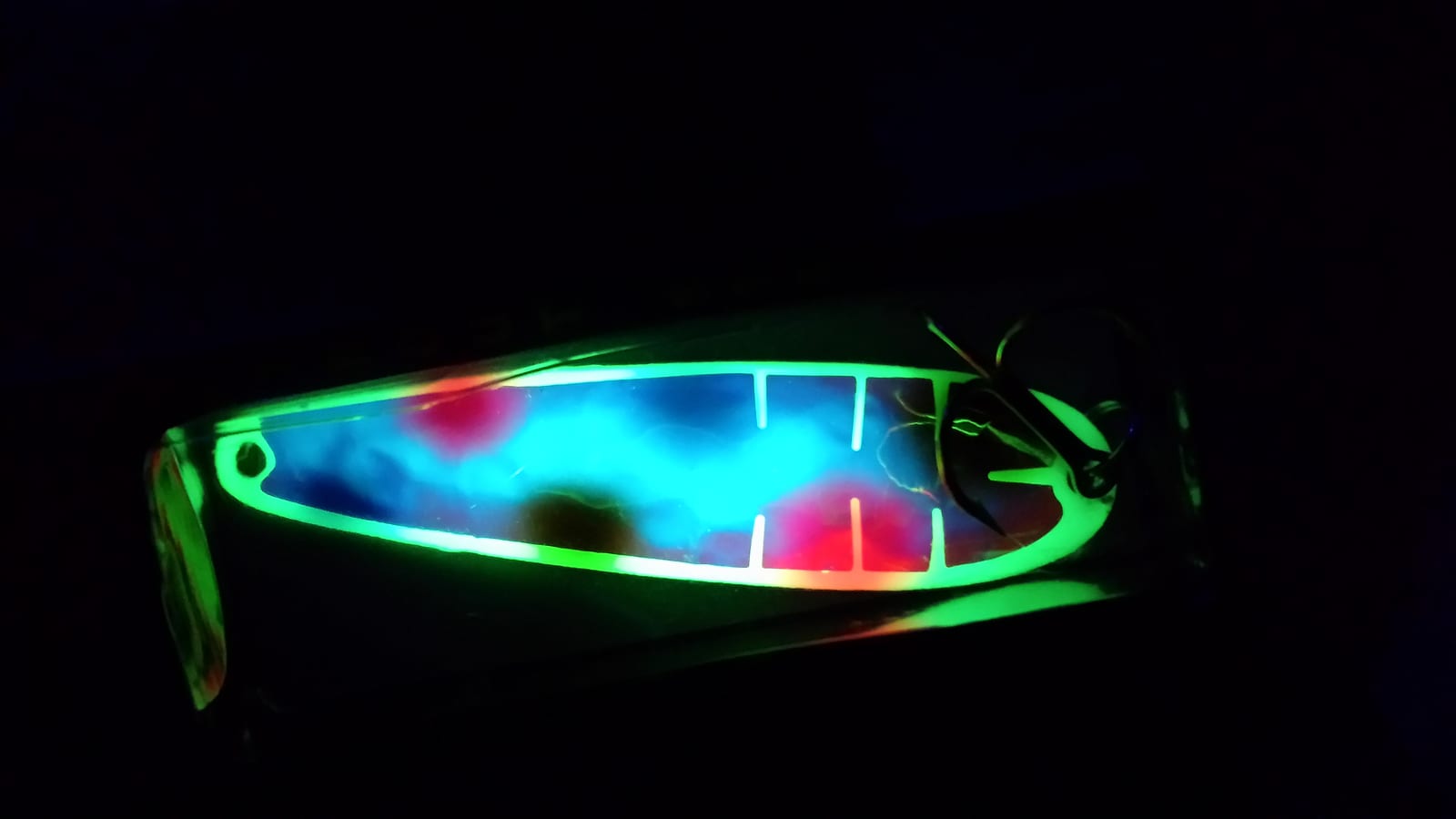
My own confidence bait for that water is a glow spoon, charged bright before it goes down. Trolled off the Clipper during the runs, it has always done well for me.
Walleye have a signature spot on the north side: where the Bear Lake channel enters Muskegon Lake, the water just east of the channel mouth is treated by locals as some of the best walleye water on the lake. And off the North Muskegon shore, in front of Custer Park and Waterfront Sports Park - the small lakefront park locals still call Block 58 - the bottom steps down a shelf toward the lake's deeper middle. Boats troll that break constantly through the open-water months, and they do well on it.
And then there are the perch. When the bite turns on, they come in big numbers - and so do the anglers. The best-known perch water on the lake is the Sand Docks: the deep water at the west end just south of the channel, named for the pilings left from the old sand-mining docks. It is a genuine local hotspot, with a caveat locals know well - the most popular access is not always the most productive fishing. When the Sand Docks are crowded or quiet, the water locals rotate through includes the deep holes off the end of the Bear Lake channel, Snug Harbor, and the Red Buoy water off Adelaide Pointe. The winter bite is the special one, when schools of Lake Michigan perch come in to feed and roam the deep basins; Jeff Elliott Outdoors' write-up of the lake's winter access points covers that fishery in detail.
Pike and panfish round out the everyday fishery. Pike hunt the shallow, weedy stretches and protected bays, including around the Bear Lake connection; bluegill and the rest of the panfish crowd stack up in Snug Harbor and along the calmer protected shorelines.
- Spring - the river system leads. The Muskegon River walleye run is the region's headline event, and the lake's shallow, warming edges wake up first.
- Summer - open-water trolling on the breaks and shelves; the Custer Park and Block 58 shelf earns its boat traffic now, and bass work the docks and weed edges.
- Late summer and fall - staging salmon in the deep holes: the Clipper and the Verplank port water, before the river run.
- Winter - ice fishing takes over the protected areas once the ice builds and the shanty community sets up; perch are the headline target, with the Sand Docks drawing the biggest crowd on the ice.
Seasons slide year to year with ice-out and water temperature, and none of this is a promise of fish. But after more than twenty years living on this lake, this is the pattern that repeats.
There are also local captains who run this water for a living. I met Captain Ryan Art of Feed-N-Time Charters at a parade in town in August 2026 when he handed me his card; his boat fishes salmon, lake trout, and steelhead out of downtown Muskegon, on the big lake and Muskegon Lake both. I have not been out with him yet, so take this as an introduction, not a review.
Public Access and Fishing Locations
Public access is one of the most practical issues on Muskegon Lake. The DNR report is direct about it: shore access is limited on the southern and eastern shorelines, especially for people fishing without a boat. That matters because the lake sits right next to the area's largest population center.
Southern Shore and City-Side Access
- Cottage Grove Access Site, also shown on some maps as Jaycee Launch, is identified by DNR as both shore fishing access with limited accommodations and a public boat launch.
- Grand Trunk gets the same DNR designation on both counts: shore fishing and a public boat launch.
- Hartshorn appears in the report with the same shore-fishing designation and a public boat launch area.
- Heritage Landing is listed as public access - not as a boat launch.
- Fisherman's Landing rounds out the launch list, carrying the same DNR shore-access note and a public boat launch.
- The SPX Breakwater is described by DNR as modest shore fishing access.
North Shore, Park, and Channel Access
- Muskegon State Park is noted by DNR for boat launching facilities, a fish cleaning station, and shore fishing access.
- The north shore also includes small City of North Muskegon parks and the Muskegon Lake Nature Preserve, where public access is available.
- Shore anglers commonly fish both sides of the channel that connects Muskegon Lake to Lake Michigan.
- Channel and breakwater areas are part of the connected harbor setting, but conditions can change quickly and this page is not a safety or navigation guide.
The practical lesson is to verify the exact access type before you go. Some places are launches, some are parks, some are shoreline access points, and some are nearby marina or harbor areas. They are not interchangeable. For the launch-by-launch local detail - ramp fees and passes, boat-size limits, first-hand photos, and a locator map - see the Muskegon Lake marinas and boat launches guide.
Muskegon Lake Fishing Tournaments and Event Days
Muskegon Lake and Muskegon Harbor are used for local bass tournaments, youth fishing events, and major salmon tournament activity. Anglers may want to check the live Muskegon Lake webcam, which shows on-site shoreline weather readings, wind, rain, air temperature, and, when available, nearshore water temperature before launching.
The DNR fishery report puts numbers on the bass side: between 2016 and 2024, anglers held 470 bass tournaments on Muskegon Lake, more than on any Michigan lake except Lake St. Clair and Gull Lake, and reported 39,593 bass caught, about 86 percent of them largemouth.
Notable local tournament and event references include the Muskegon Pro/Am / Adelaide Pointe Open, West Michigan Bass, Michigan Bass Federation events, TTT's Outdoor Adventures youth and high school events, and the Armed Forces Salmon Assault.
Tournament dates, launch locations, and rules can change. Always confirm details with the organizer or the Michigan DNR Fishing Tournament Information System before planning around an event.
Local ramp-name note
Fisherman's Landing is sometimes listed in tournament systems as Giddings Street Ramp, so anglers may see either name when checking event details.
Depth, Structure, and How Fish Use the Lake
Muskegon Lake's depth and shape help explain why the fishery is so varied. It has a protected lake basin, a deep-water harbor connection, shallow and vegetated areas near the upper lake and river mouth, shoreline structure, submerged wood, and a direct path between Lake Michigan and the Muskegon River system.
The bottom, as the DNR report maps it, runs sand and gravel through much of the lake and more organic in the upper portion, with dense aquatic plant growth in some areas and a large coastal wetland in the lower Muskegon River corridor. Different fish key on different depths, edges, cover, and seasonal movement routes within that mix.
If you want a visual orientation to the lake shape, channel, and broad depth contours, use the local water depth reference.
Not Navigation Advice
Depth, access, weather, water levels, channel conditions, and boating hazards can change. Use current official navigation information, posted signs, marked aids, local conditions, and your own judgment on the water.
Lake Health, Shoreline, and Habitat
The DNR report gives Muskegon Lake credit as a fishery, but it does not pretend every shoreline issue has been solved. It describes a lake shaped by dredging, filling, hardened shorelines, industrial history, marinas, docks, and private shoreline development. It also notes that the southern and eastern shorelines have the least public access and the most intense development pressure.
From a fish habitat standpoint, the report points toward practical shoreline choices: natural vegetation, buffer strips, setbacks, less hardening where possible, retaining downed trees in appropriate shallow areas, and treating aquatic plants only when they create a real nuisance for recreation or navigation. Ordinary shoreline decisions like these affect fish, turtles, birds, insects, and water quality.
Put plainly: Muskegon Lake's restoration story is real, but stewardship did not end with delisting. Public access, shoreline treatment, aquatic plants, and habitat decisions still shape the lake.
If you are eyeing a place to live on this water, the same shoreline and high-water issues reach buyers too. The waterfront flooding and hidden-risks guide covers the problems a listing will not.
Muskegon Lake Restoration and Area of Concern Status
Fishing on Muskegon Lake cannot be separated from its recovery. The lake spent decades as a Great Lakes Area of Concern and was officially delisted in September 2025 after the cleanup. For anglers, the restored habitat and water quality behind today's fishery are the point; the full cleanup, delisting, and shoreline-change story lives on the waterfront transformation guide.
How the Fishery Shapes Life on the Lake
Fishing sits at the center of Muskegon Lake's identity. You see it in winter ice shanties, channel anglers, bass tournaments, panfish activity, walleye attention, and the way people talk about the lake as more than scenery. It is one reason the year-round rhythm of Muskegon Lake feels different from a lake that only wakes up in July.
Public access affects how people experience the lake. A restored fishery is more meaningful when people can reach the water, fish from shore, launch appropriately sized boats, use parks, and understand where access is public versus private.
The Lake Michigan connection runs through all of it. Muskegon Lake is protected compared with the open big lake, but it is not isolated from it. That connection affects fish movement, boating behavior, channel use, and the overall character of the lake. For the living and maintenance tradeoffs, see the Muskegon Lake vs Lake Michigan comparison.
Read the DNR fishery report as evidence that Muskegon Lake is a complex, managed, recovering, connected fishery where access and habitat choices still shape the future; it promises nothing about any one trip.
Eating Your Catch: Michigan's Eat Safe Fish Guidelines
Muskegon-area waters carry a long industrial history, and some of that legacy still shows up in the fish. The Michigan Department of Health and Human Services (MDHHS) runs the Eat Safe Fish program: it tests the filets people actually eat and sets meal-frequency guidelines by species and size, based mainly on PCBs and mercury, with contaminants like DDT, PFOS, and dioxins flagged on some waters.
Muskegon Lake, Mona Lake, Bear Lake, and other local waters each have their own listings - the safe amount for a walleye is not the same as for a carp, and larger, older, fattier fish generally carry the strictest limits. Rather than reprint numbers that change between editions, we point you to the source that stays current:
- Get the guide at Michigan.gov/EatSafeFish and choose "Find Your Area." Muskegon Lake is listed by name under the delisted Areas of Concern; Mona Lake, Bear Lake, and other nearby waters are covered by the Southwest Michigan guide.
- Or call MDHHS at 1-800-648-6942 for a free print copy.
A few habits MDHHS recommends to lower exposure on any water: favor smaller, younger fish and panfish over big predators and bottom-feeders; trim the fat, skin, and belly meat where PCBs concentrate; and bake, broil, or grill on a rack so the fat drips away. That lowers some contaminants, but not mercury, which is held in the meat itself - so it does not replace the lake-specific guide.
This is general information, not health advice. Always follow the current MDHHS Eat Safe Fish guidance for the specific water and species you are fishing.
Related Muskegon Lake Guides
Sources
- Michigan DNR - Status of the Fishery Resource Report 0448, Muskegon Lake, 2025
- Michigan DNR - Weekly fishing report
- U.S. EPA - Muskegon Lake Area of Concern delisted
- Michigan EGLE - Muskegon Lake removed from list of Great Lakes' most polluted sites
- Michigan MDHHS - Eat Safe Fish Guide, Muskegon County